Phoebus Fellow of the month: Clara Bondia
This month, we go behind the scenes of our restoration studio, where a new Phoebus Fellow joins the team for three months: Clara Bondia. She is pleased to share more about her projects at The Phoebus Foundation.
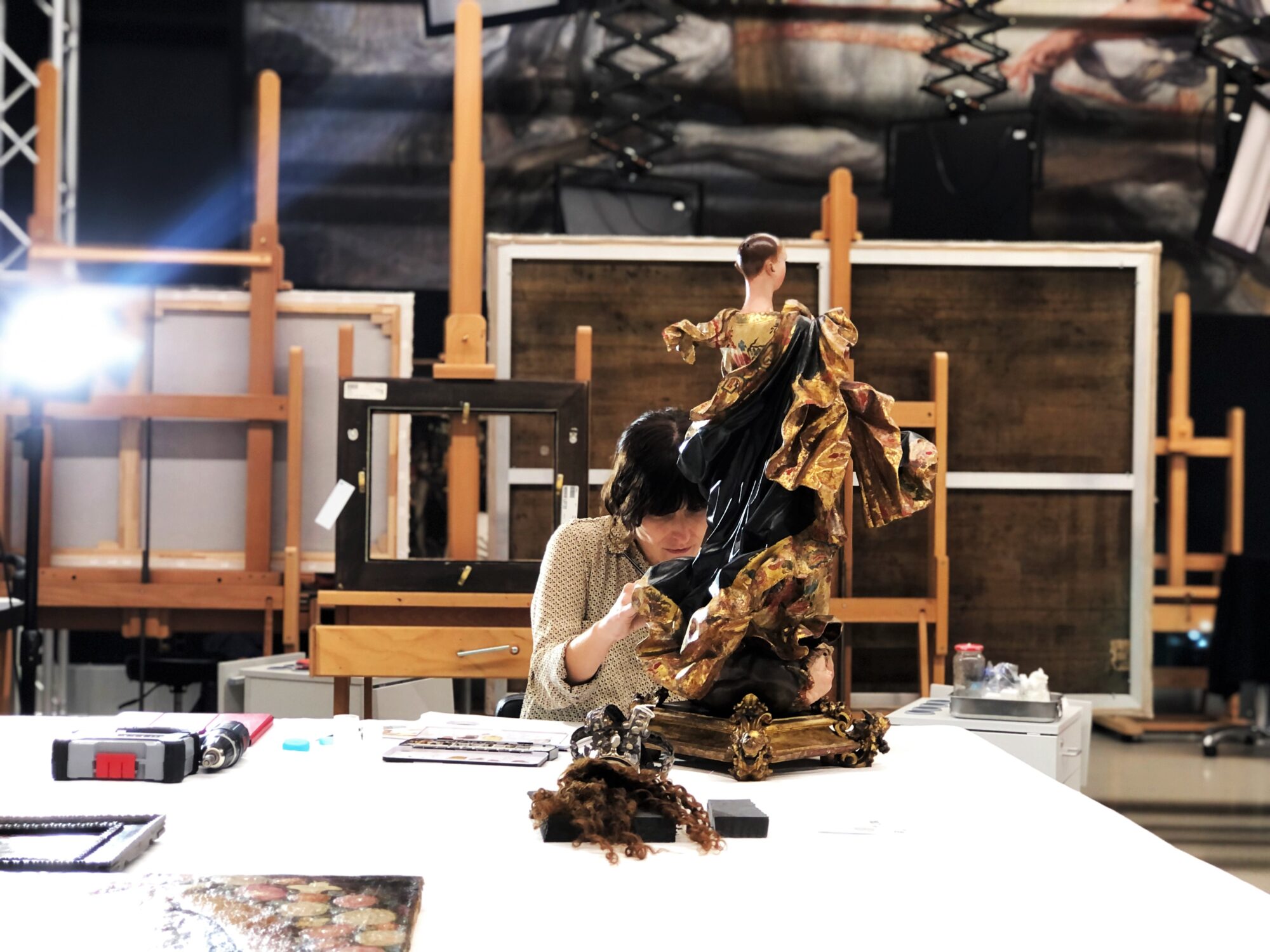
“On the one hand, I am studying and restoring an eighteenth-century Latin American sculpture of the Immaculate Conception, catalogued as School of Quito, one of the most prestigious traditions in colonial sculpture. The work is made of gilded, prepared, and polychromed wood, featuring carving and decoration of exceptional quality.”
“After the preliminary and analytical study using X-ray photography, I began stabilising the pictorial layer. The piece had been previously restored, so it was interesting to find out which parts were adhered to or overpainted. In this way, the degree of intervention could be determined. Once the pictorial layer was stable, selective cleaning was carried out, and some of the disturbing overpaint that distorted the view of the piece was removed. When the restoration is finished, it will allow for a better aesthetic reading of the piece.”
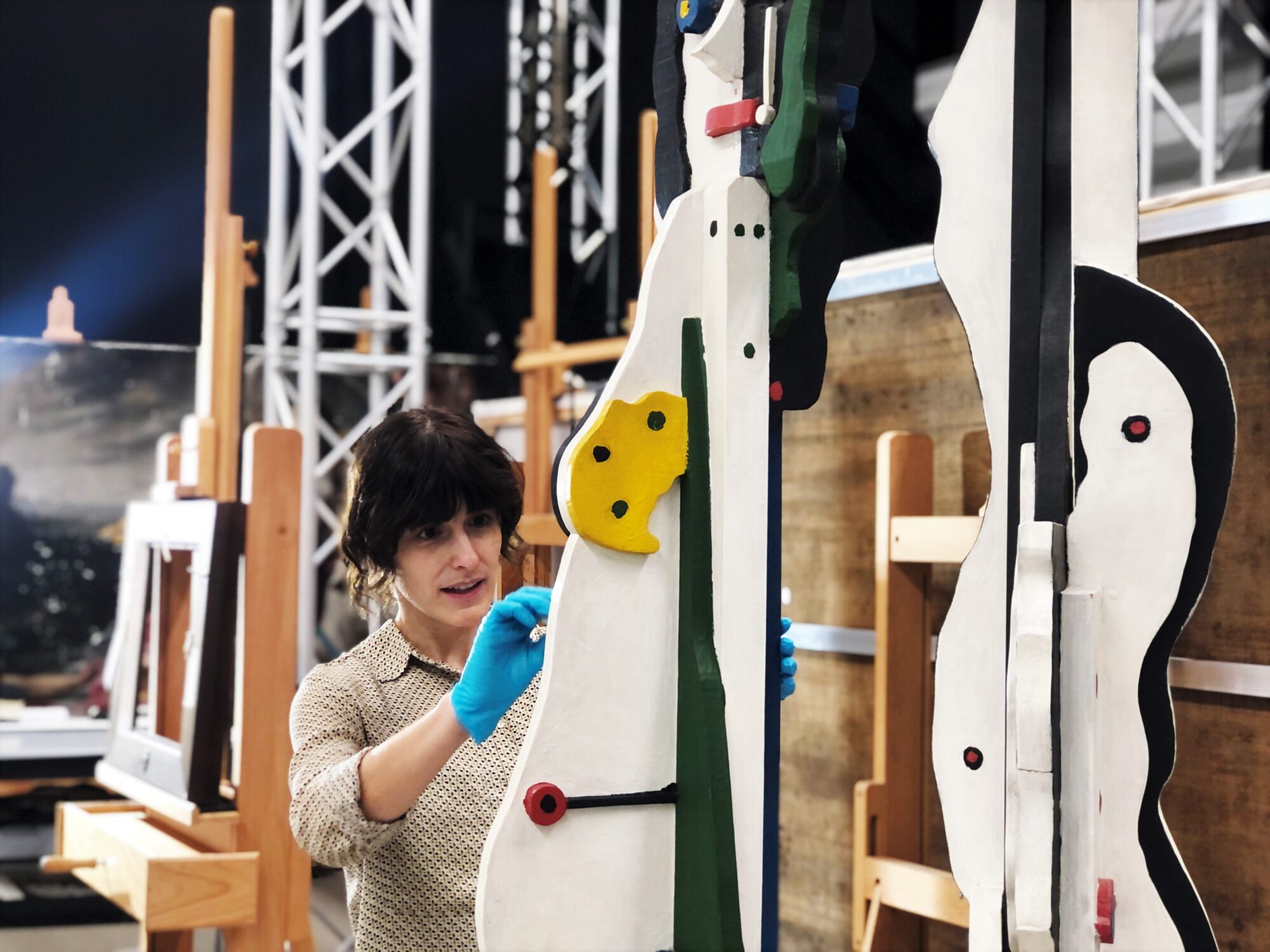
“On the other hand, I am also collaborating on an interesting research project on the work Muñecos (Dolls) by the Italian-Argentine artist Líbero Badii, which is an installation of several polychrome wood sculptures with oil. According to the artist, they represent “the figure of the massified contemporary man, and his need for vital cosmic projection, materialised through the strings that unite all the figures”. I enjoy working with contemporary art because of the great challenge it presents in confronting new techniques and new materials.”
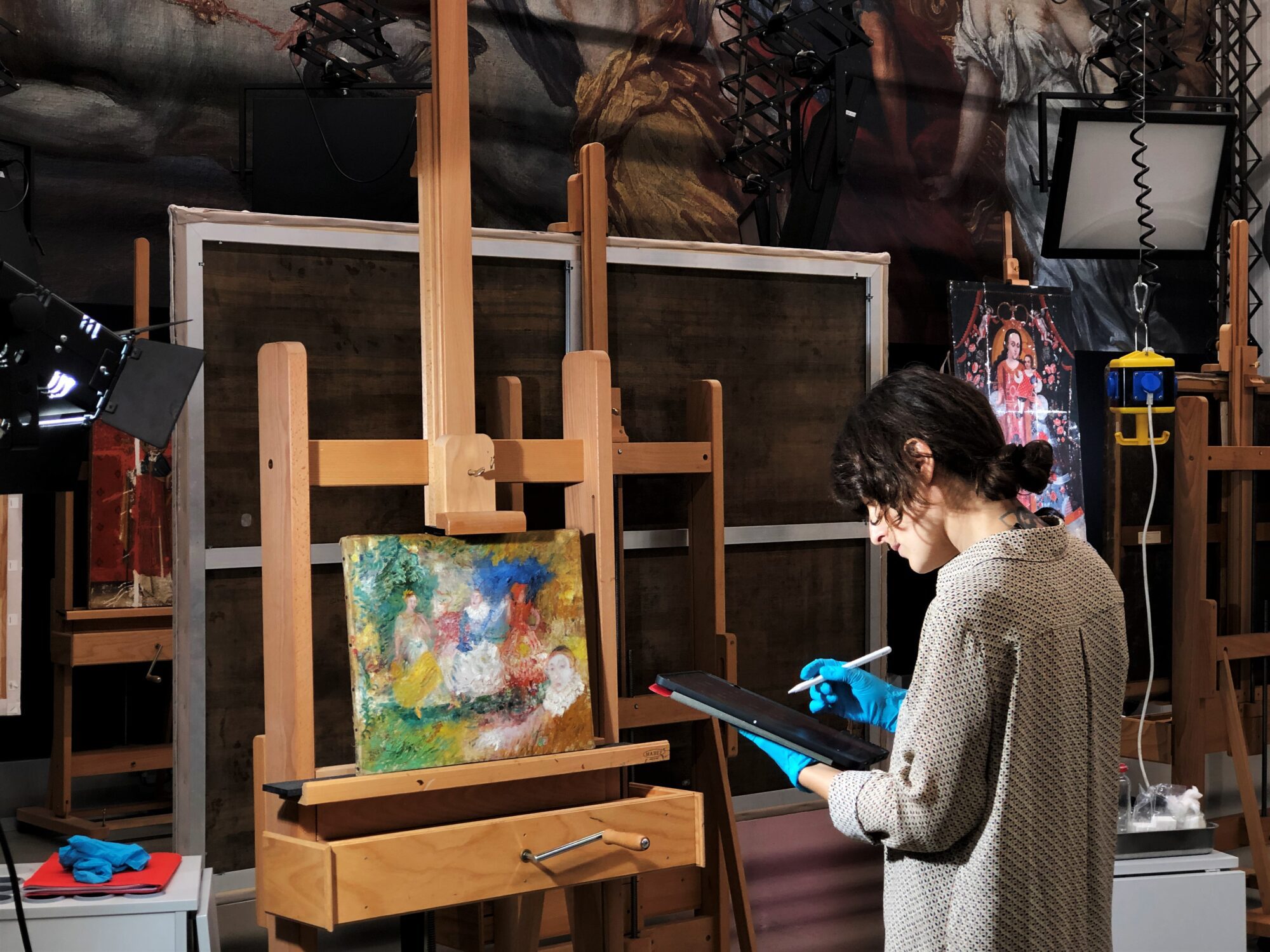
“During my stay at The Phoebus Foundation, I will also be able to collaborate in the revision of some other works in the Latin American collection of modern and contemporary art, carrying out condition reports and specific interventions. Ultimately, the pieces will be ready to travel and be admired. It is fantastic to work closely with an organization like this, which takes care of the conservation and research of each piece with the best possible means.”