Whale hunting in Vremde Park
Please note that the podcast is currently available in Dutch only.
We’re standing beside a muddy pond in a rather unremarkable little park on the outskirts of Antwerp. Nothing very exciting, you might think. But wait… Let’s jump back 8 million years, to a time when this was the seabed and prehistoric sharks, whales and other sea monsters swam above what is now the park. Hang on… that means there could still be traces of those animals buried right here beneath our feet. Could there? “Look, someone’s already been digging here. But they didn’t recognise the treasure.”
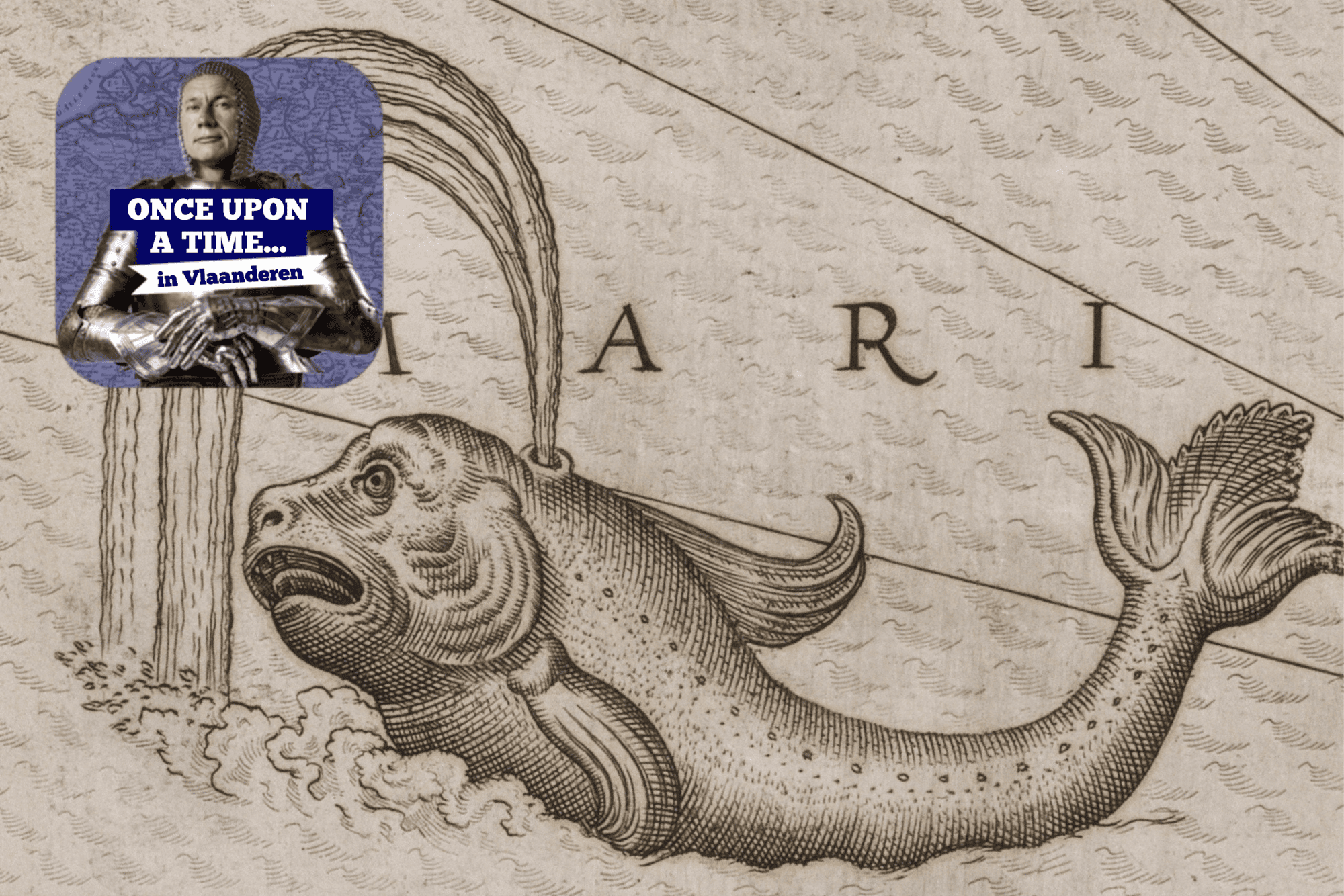
From deep-sea fish to giant predator
The Phoebus Foundation’s collection includes not only works of art, but also remarkable natural history objects that reflect the richness and diversity of the natural world.
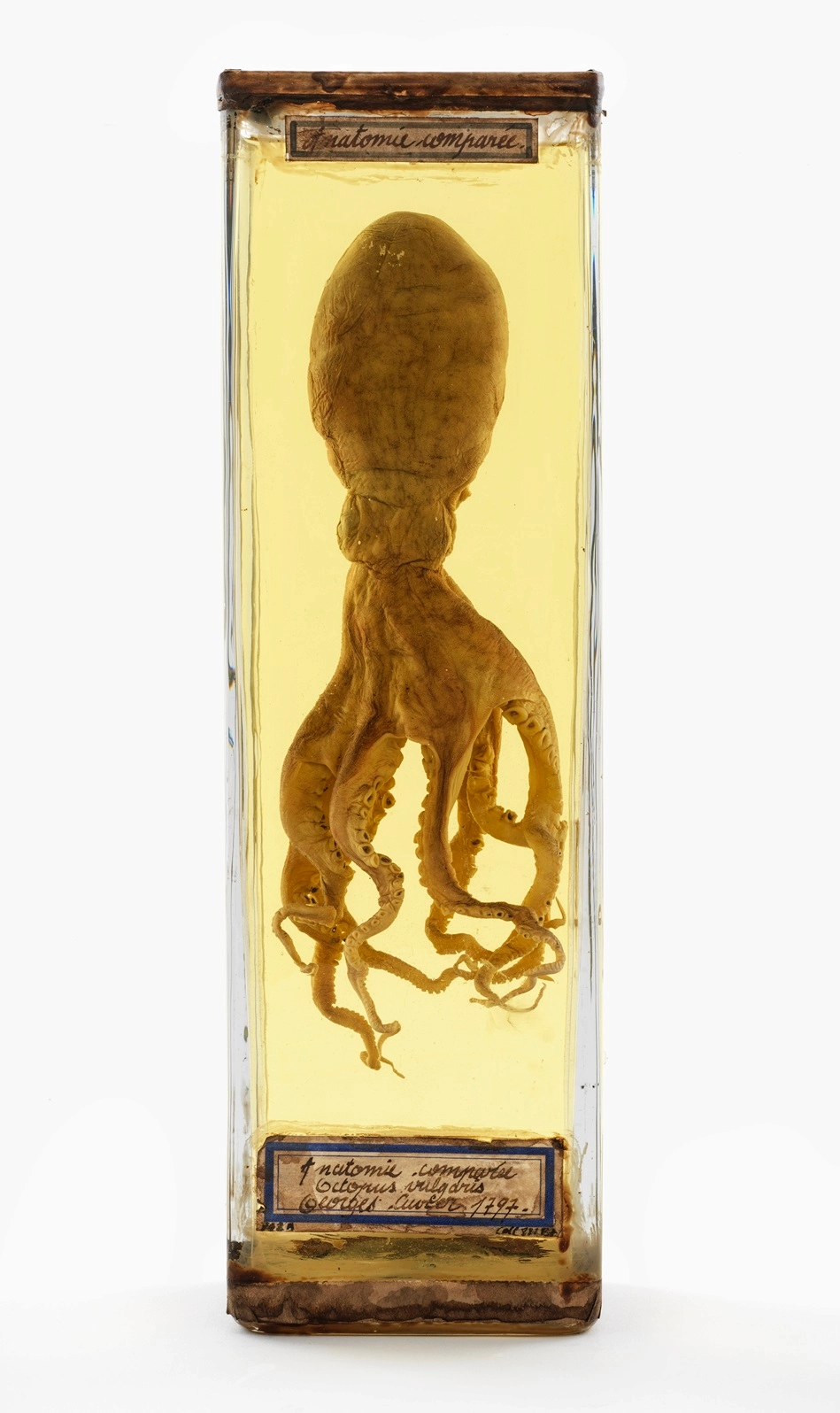
Preserved squid specimen
This historic specimen shows a squid carefully preserved for anatomical study. Squid and other cephalopods have fascinated people for centuries. Their intelligence, ability to change colour and mysterious underwater world have made them compelling subjects for scientists and storytellers alike.
Megalodon tooth
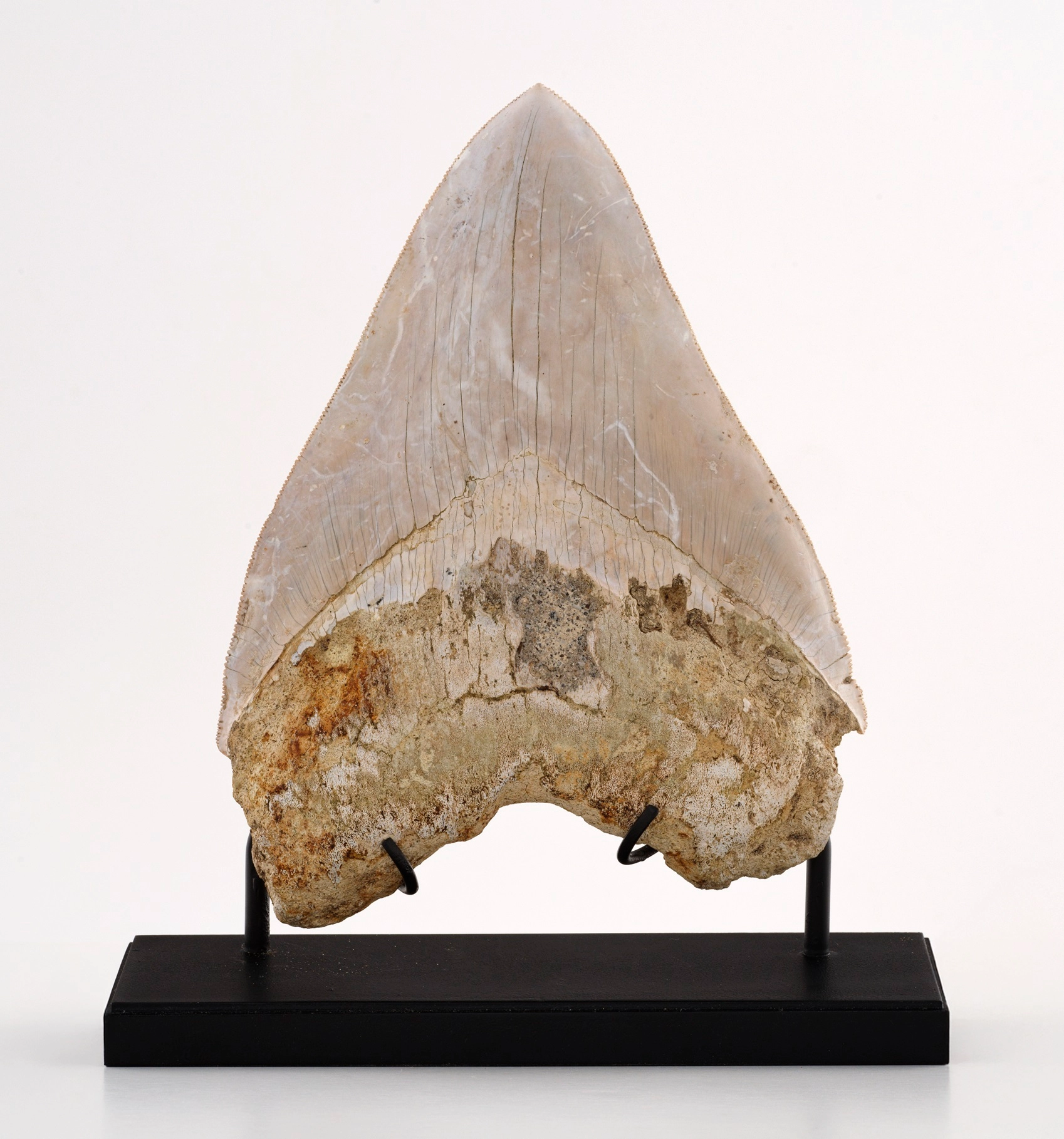
This fossilised tooth of Otodus megalodon dates from the Miocene and was found in Indonesia. At 14 centimetres high, it is an impressive remnant of this extinct shark.
Because sharks’ skeletons are made mostly of cartilage, very little of them is usually preserved. Their teeth fossilise much more readily. Much of what we know today about Otodus megalodon is therefore based on the study of finds like these.
Although only a limited number of remains are known, scientists estimate that adult animals could grow to around 15 to 18 metres in length.
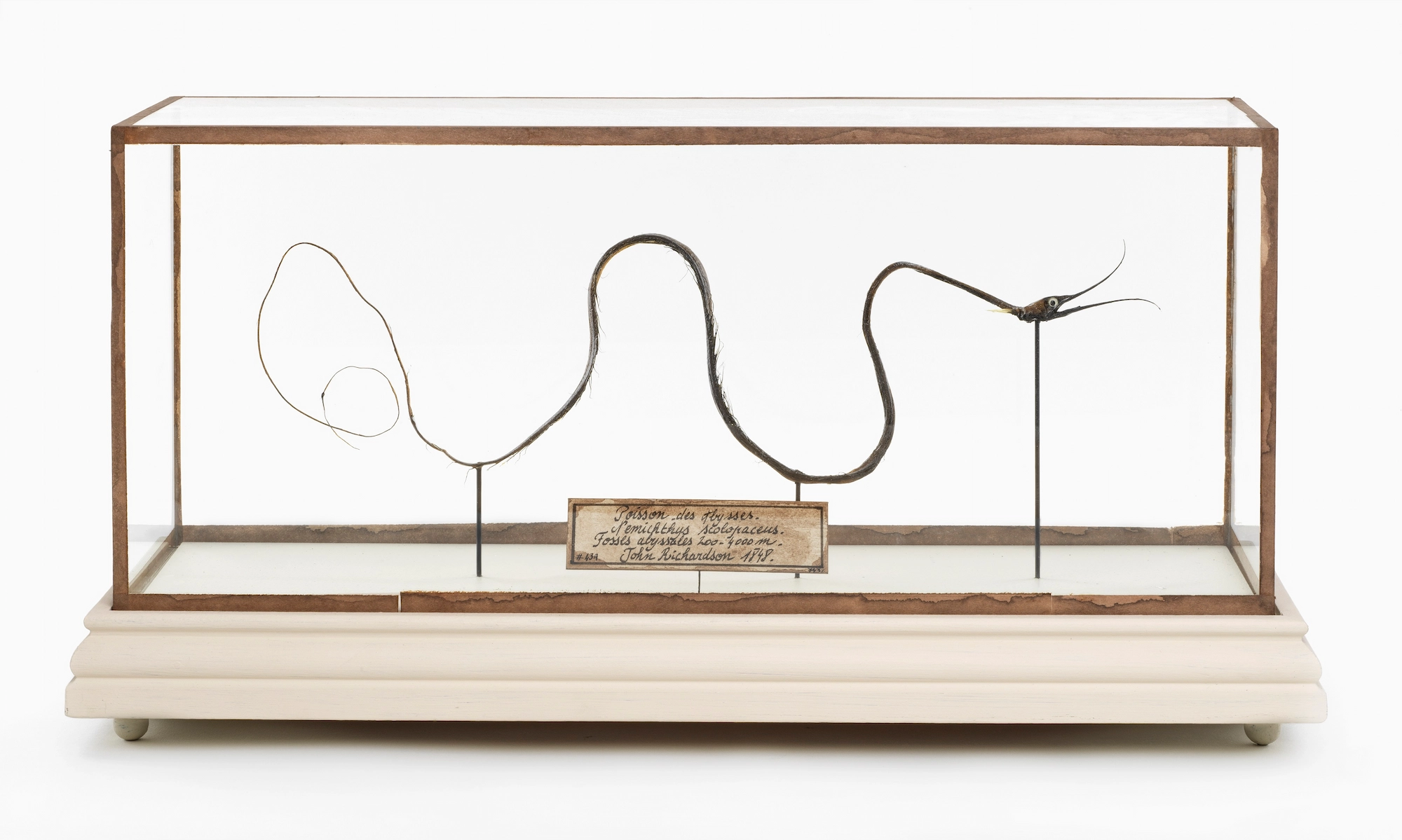
Deep-sea fish
This deep-sea fish belongs to the species Nemichthys scolopaceus, which is found at depths of around 200 to 4,000 metres. It is distinguished by its exceptionally elongated body and narrow jaws.
This specimen is preserved in a display case and forms part of a long tradition of natural history collecting. Deep-sea animals were particularly fascinating because they were rarely seen and came from a world that remained largely inaccessible to scientific research for a very long time.
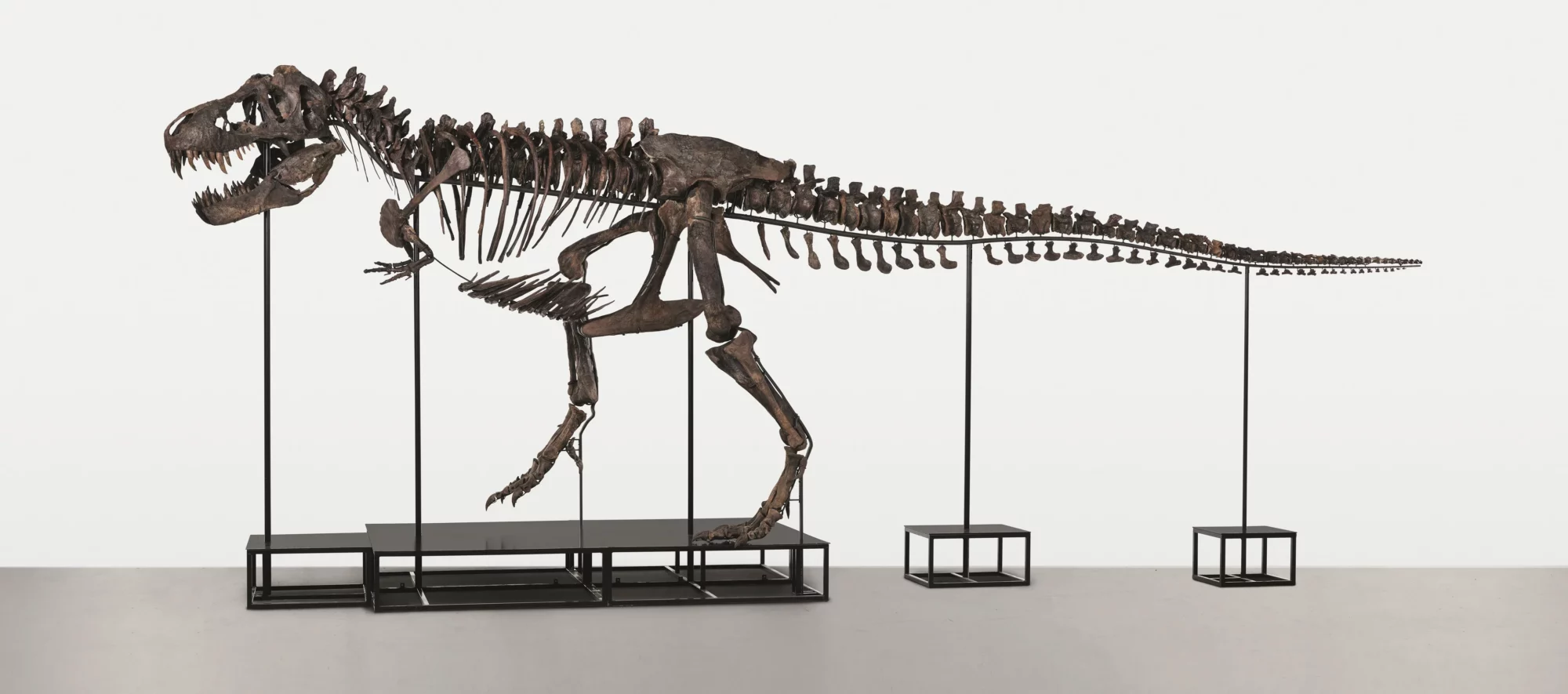
T. rex Trinity
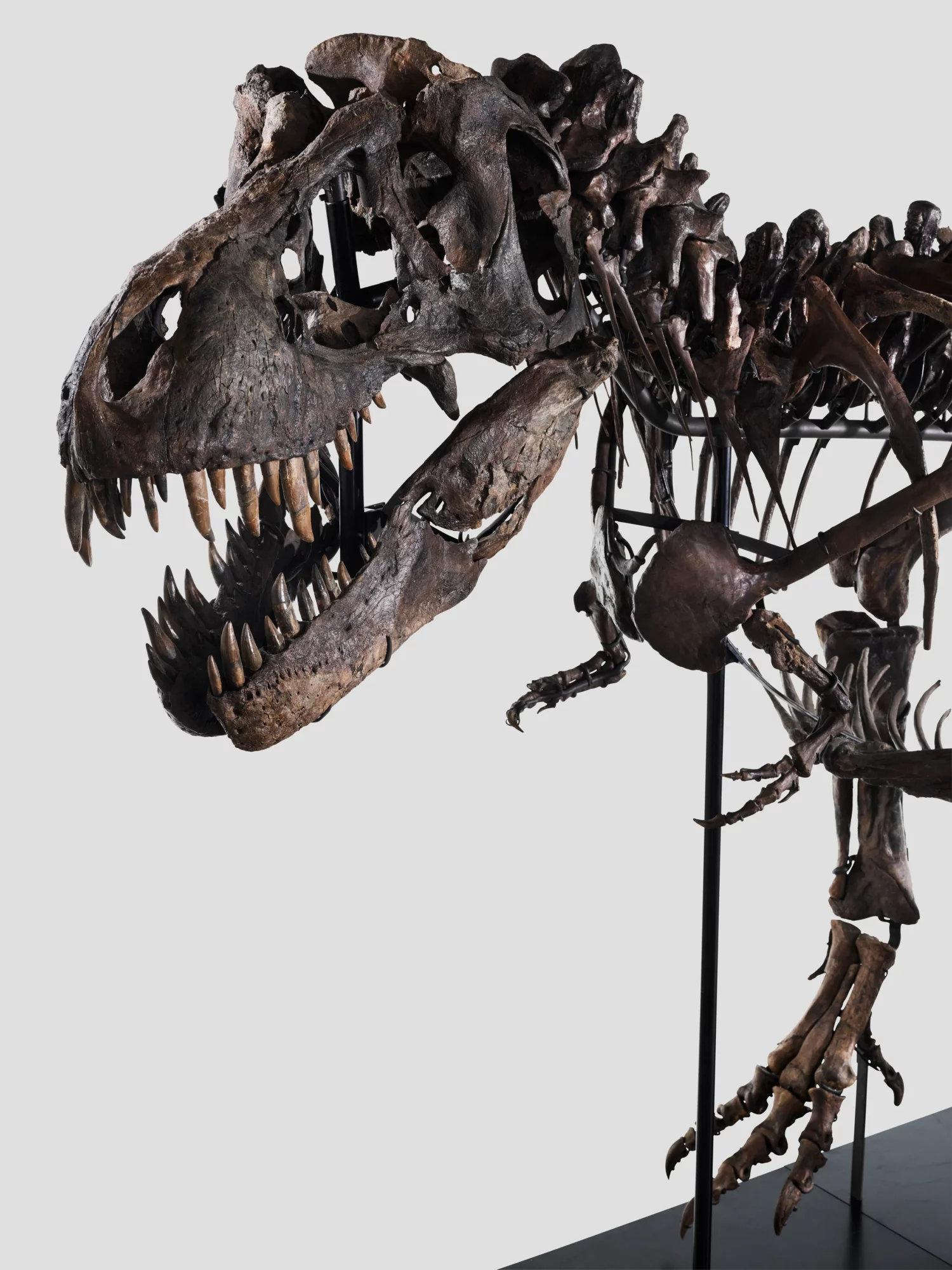
TRX-293 Trinity is one of the best-preserved and most complete mounted Tyrannosaurus rex skeletons in the world. Measuring 11.6 metres in length and 4.37 metres in height, she belongs to a very small group of T. rex skeletons on display worldwide.
The skeleton dates from the Late Cretaceous, around 67 million years ago, and is made up of fossilised bones from three individual Tyrannosaurus rex specimens excavated in Montana and Wyoming between 2008 and 2013. The exceptionally well-preserved skull comes from a single animal and is one of Trinity’s most remarkable features.
Trinity is currently being studied by an international team of palaeontologists led by Nizar Ibrahim of the University of Portsmouth. The research focuses, among other things, on growth, injuries, fossilisation processes and the environment in which Tyrannosaurus rex lived.
Once Upon a Time in Flanders is a podcast created by Sven Speybrouck and published by Nieuwsblad. Special thanks go to archaeologist Marc Bosselaers. The podcast was made possible with the support of The Phoebus Foundation SON, Katoen Natie Group, Indaver and Hannibal Books Explore more prehistoric fossils from the collection of The Phoebus Foundation.