Goossen Van der Weyden - The Life of Saint Dymphna - The Phoebus Foundation

With Koen Fillet, Sven Van Dorst (Chief Conservator) and Niels Schalley (Project Coordinator) of The Phoebus Foundation

The life of Saint Dymphna reads like a fairy tale! The life story of this remarkable saint appeals so much to the imagination that Goossen Van der Weyden (1465-1538), grandson of the famous Rogier, painted an altarpiece, consisting of eight panels, with an episode from the life of Dymphna on each panel. But it is not only the iconography of the masterpiece that is surprising. For more than three years, the panels were subjected to an extensive conservation treatment by the conservators of The Phoebus Foundation. They discovered even more extraordinary stories, which had been hidden for centuries under layers of dust and dirt. 

In the fourth episode of Phoebus Focus, Sven Van Dorst and Niels Schalley take you along their discoveries of the secrets of Dymphna and Goossen Van der Weyden.

(in Dutch)
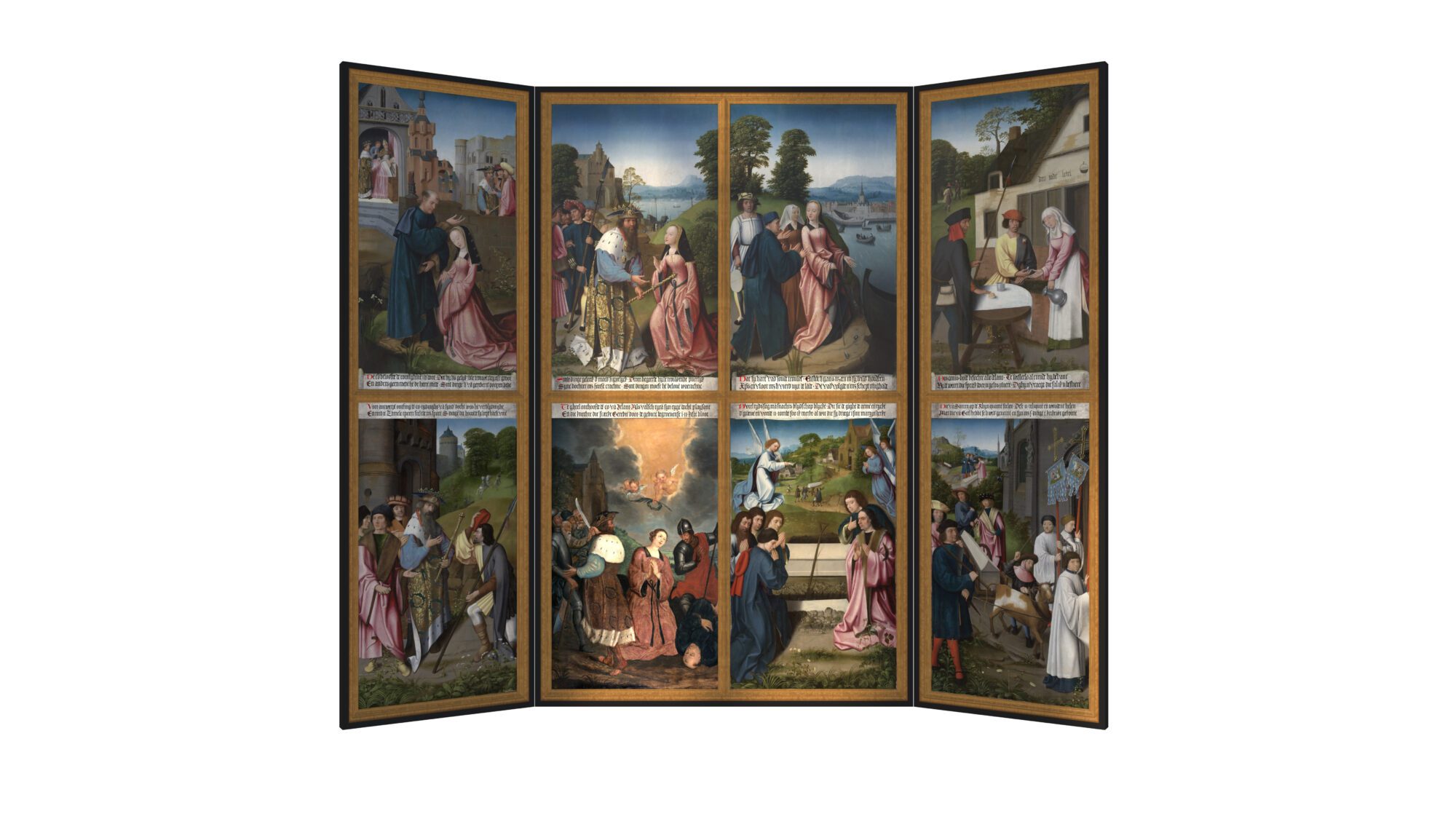

Digital reconstruction of a multi-panel altarpiece with eight painted scenes depicting episodes from the life and martyrdom of Saint Dymphna. The scenes show figures in late medieval dress, set in landscapes and urban settings. Oil on panel, Altarpiece of the Life of Saint Dymphna, 1505.
Digital construction of Altarpiece with the Life of Saint Dymphna (1505)
Scene from the life of Saint Dymphna: a cleric blesses or crowns a kneeling young woman in a pink gown, with onlookers in a walled city with towers in the background. Panel painting, early 16th century, part of the Altarpiece of the Life of Saint Dymphna.
Goossen Van der Weyden, Baptism of Dymphna, with the Death of Dymphna’s Mother Represented in the Background, ca 1505
Scene from the life of Saint Dymphna: King Damian, richly dressed and accompanied by courtiers, asks Dymphna to marry him. She stands in a pink gown and rejects his proposal. A castle and river landscape appear in the background. Panel painting by Goossen van der Weyden, ca. 1505.
Goossen Van der Weyden, Dymphna’s Father Proposes to her, ca 1505
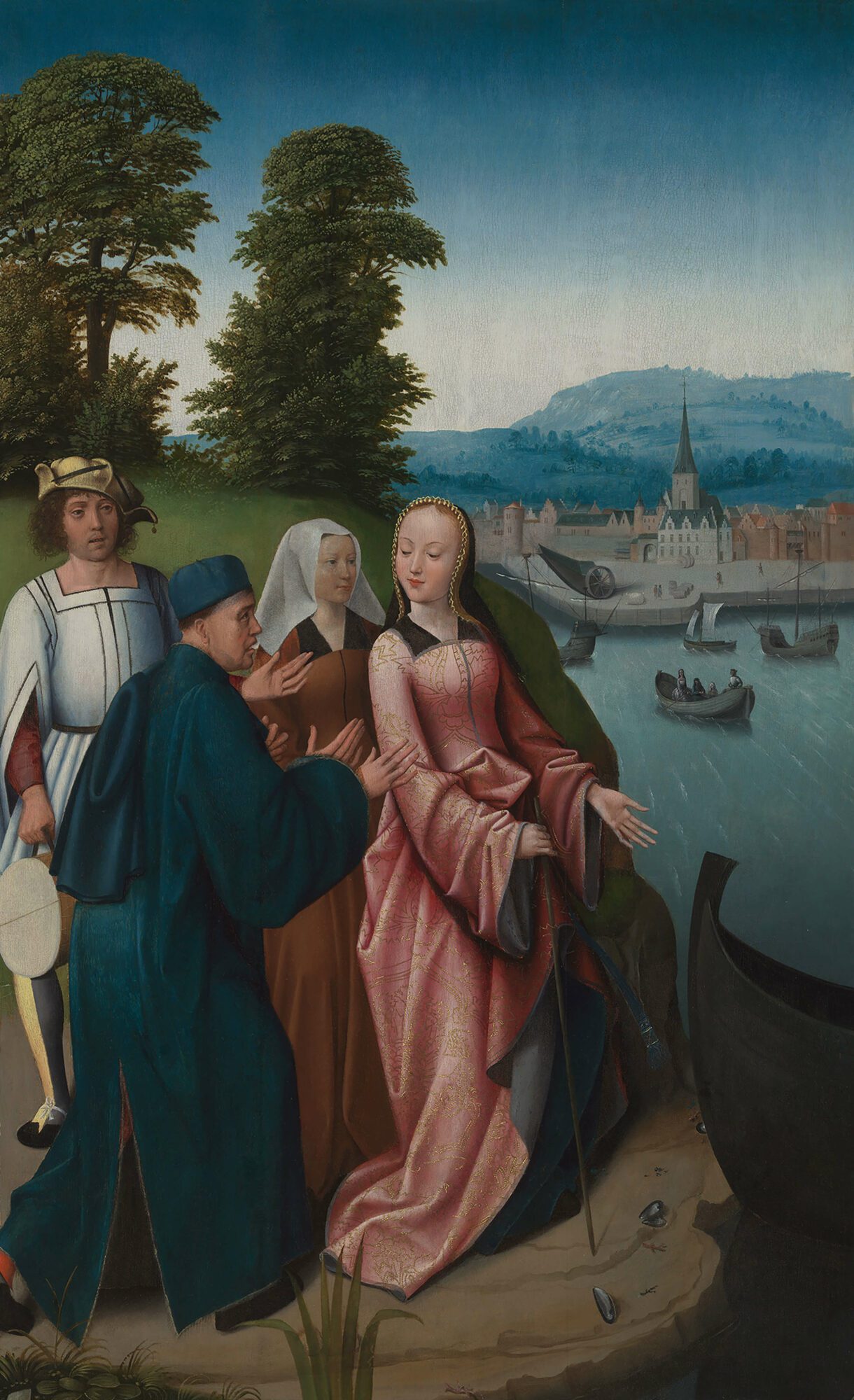
Goossen van der Weyden, Dymphna and her companions about to embark, ca. 1505. Saint Dymphna, dressed in pink, stands on a riverbank with her companions. In the background, a town with boats and towers appears, while a vessel awaits their departure.
Goossen Van der Weyden, Dymphna and her Companions about to Embark, ca 1505
Goossen van der Weyden, The innkeeper of an inn in Westerlo recognises the spies’ coins, ca. 1505.
An innkeeper wearing a pink dress and white apron stands at a round table, carefully examining coins handed to her. Two men face her, one holding a spear. Behind them is an inn with an inscription and a green landscape with trees and figures.
Goossen Van der Weyden, The Landlady at the Inn of Westerlo Recognises the Foreign Coins of the Spies, ca 1505
Goossen van der Weyden, The spies inform the king of Dimpna’s hiding place, ca. 1505.
A bearded king dressed in a richly decorated robe stands near a city gate, listening closely to a man who removes his red cap as he delivers his message. Courtiers in colourful dress gather behind them. In the distance, a hilly landscape appears with horsemen and a fortified town.
Goossen Van der Weyden, The King’s Spies Bring Him News of Dymphna’s Hideout, ca 1505
Goossen van der Weyden, The sarcophagi containing the bodies of Dimpna and Gerebernus are discovered, ca. 1505.
A group of men kneel in prayer around an open grave containing two sarcophagi, their focus fixed on the discovery. Angels hover above with folded hands. In the background, a gently rolling landscape unfolds with a church and village buildings, creating an atmosphere of quiet reverence and awe.
Goossen Van der Weyden, Discovery of the Sarcophagi Containing the Bodies of Dymphna and Gerebernus, ca 1505
Goossen van der Weyden, The translation of the body of Dimpna to Geel, ca. 1505.
A solemn procession moves past a church. Clergy and laypeople accompany the body of Saint Dimpna, carried on a cart. Banners bearing sacred images lead the way as onlookers observe the event. The scene highlights the ceremonial nature of the procession and the shared reverence for the saint.
Goossen Van der Weyden, The Body of St. Dymphna Returned to Geel, ca 1505

Want to know more? Order the Crazy about Dymphna book!