How did Christ’s foreskin end up in Antwerp?
Please note that the podcast is currently available in Dutch only.
When Jesus ascended into heaven, so the story goes, his body went with him. One tiny piece remained on earth. The midwife is said to have kept his foreskin after his circumcision. Legend has it that Godfrey of Bouillon, crusader and mass murderer, sent it to Antwerp. There it was venerated for centuries alongside Christ’s crown of thorns, the scourge used to beat him and a host of other relics. The pilgrims came in droves and brought in a tidy sum. Then another nineteen Holy Foreskins turned up…
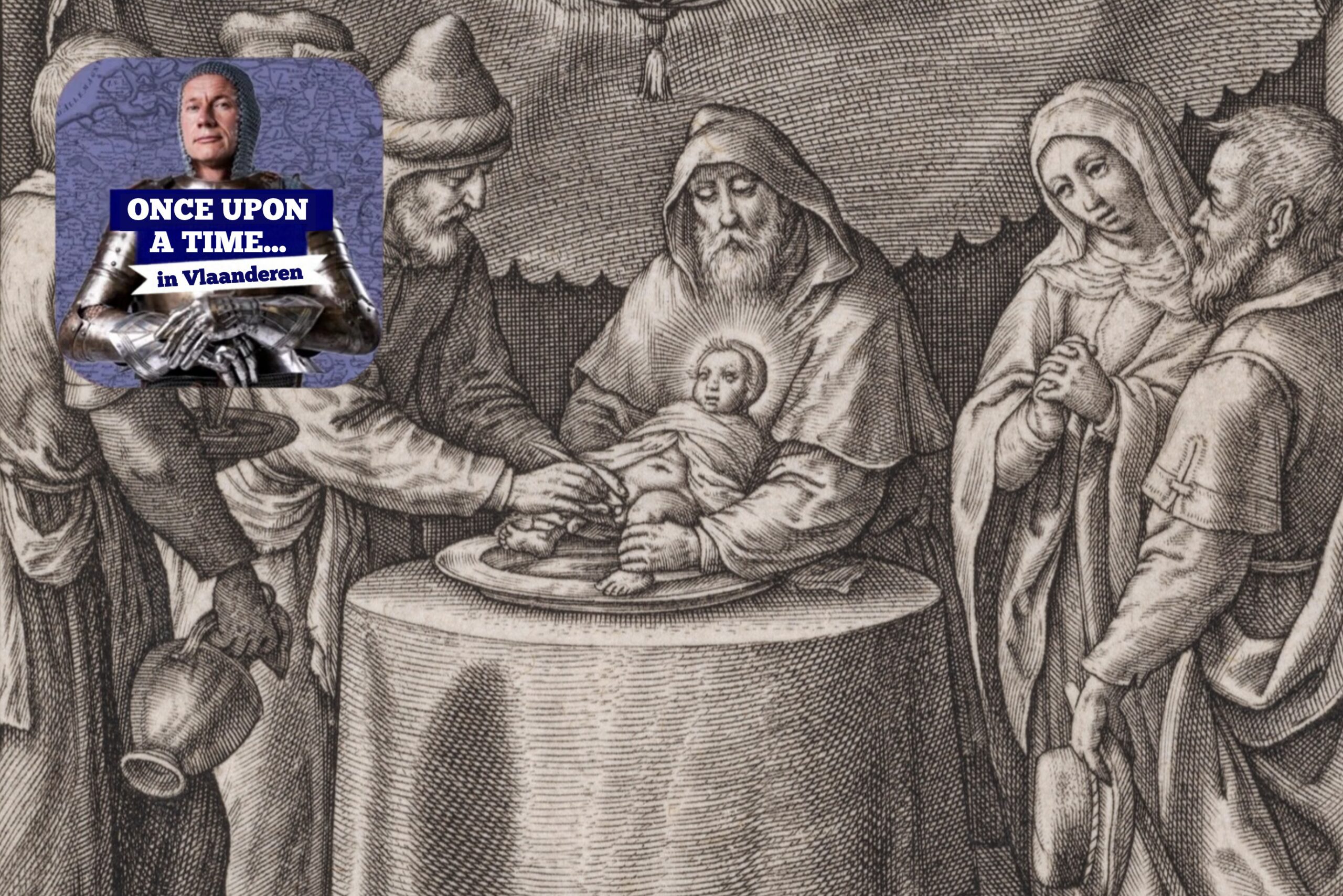
One verse, three interpretations
St Luke devotes a single verse to the Circumcision of Christ. On the eighth day after his birth, the child is circumcised according to Jewish custom and given the name Jesus. Who holds him, where Mary stands and who else is there, Luke leaves to the imagination. The subject appears several times in The Phoebus Foundation’s collection. A triptych, a fragment of a carved altarpiece and an engraving each bring a different aspect of the story into focus.
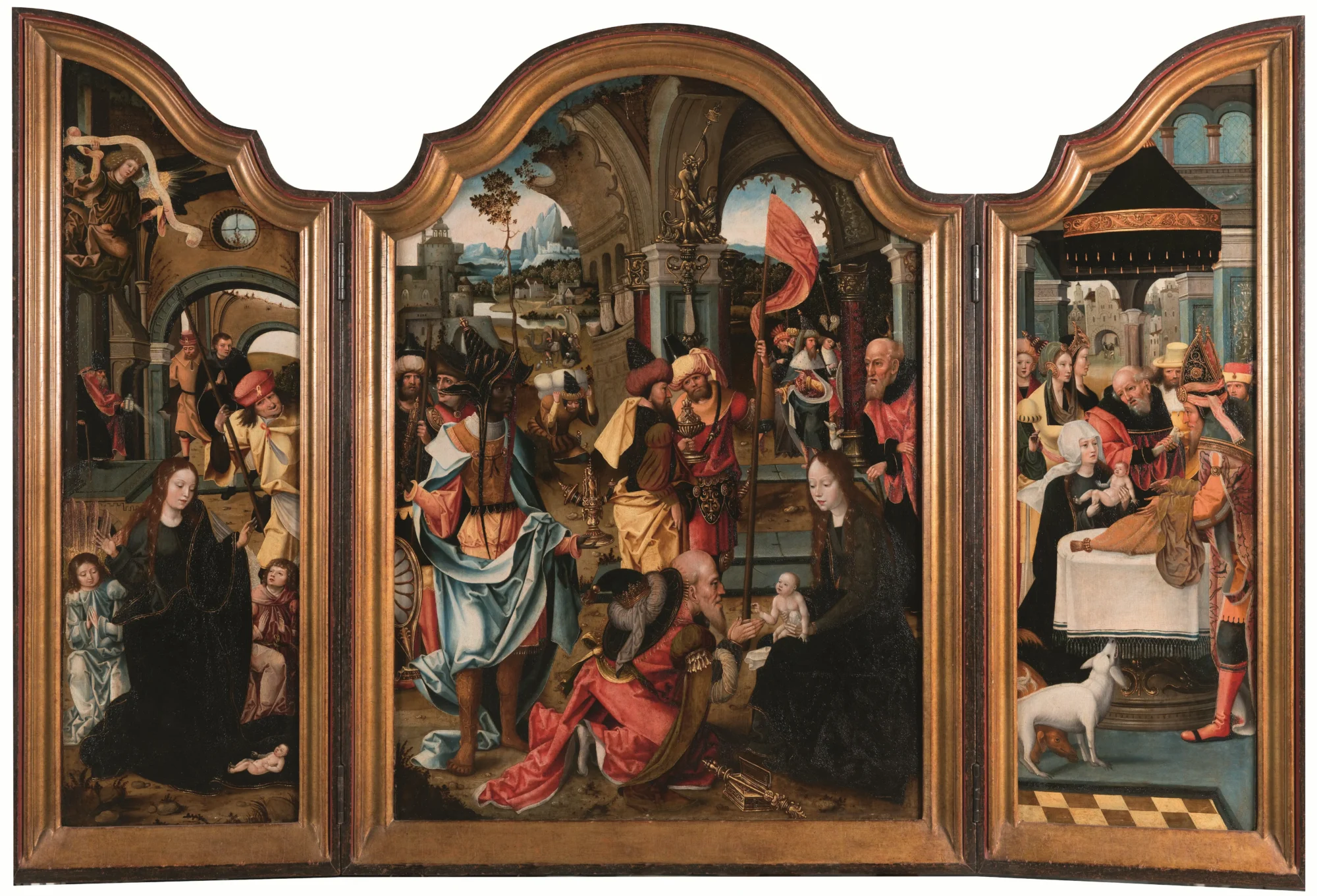
In the triptych painted by the Master of 1518 around 1510, the Circumcision takes on particular significance alongside the Adoration of the Magi. In the central panel, a king kneels before the child on Mary’s lap. On the right wing, another man bends over Jesus, this time to circumcise him. There is an echo in the way the two men bend towards the child. The Magi honour him as a king. On the wing, his circumcision marks his entry into the covenant between God and the Jewish people. The Nativity, the Adoration and the Circumcision also appear together in other works from the circle of the Master of 1518.
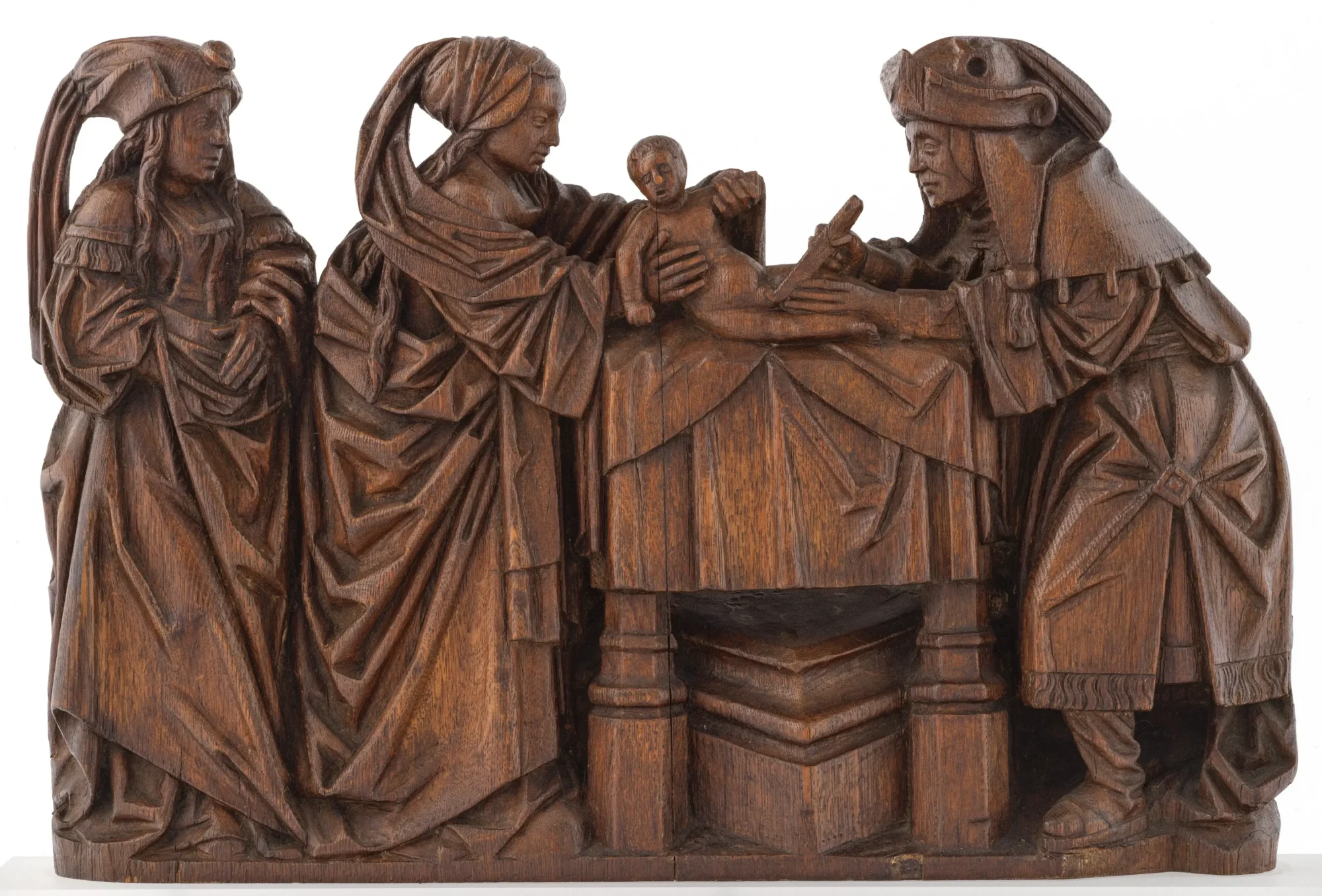
In this fragment of a 16th-century wooden altarpiece, the woodcarver brings two gestures close together. A woman steadies the child while the man opposite her holds the knife. Jesus is small enough for her to hold him upright with one hand. His vulnerability helps explain how Christians understood the scene. They saw the Circumcision as the first time Christ shed blood, so this episode from his infancy already hinted at his suffering on the cross.
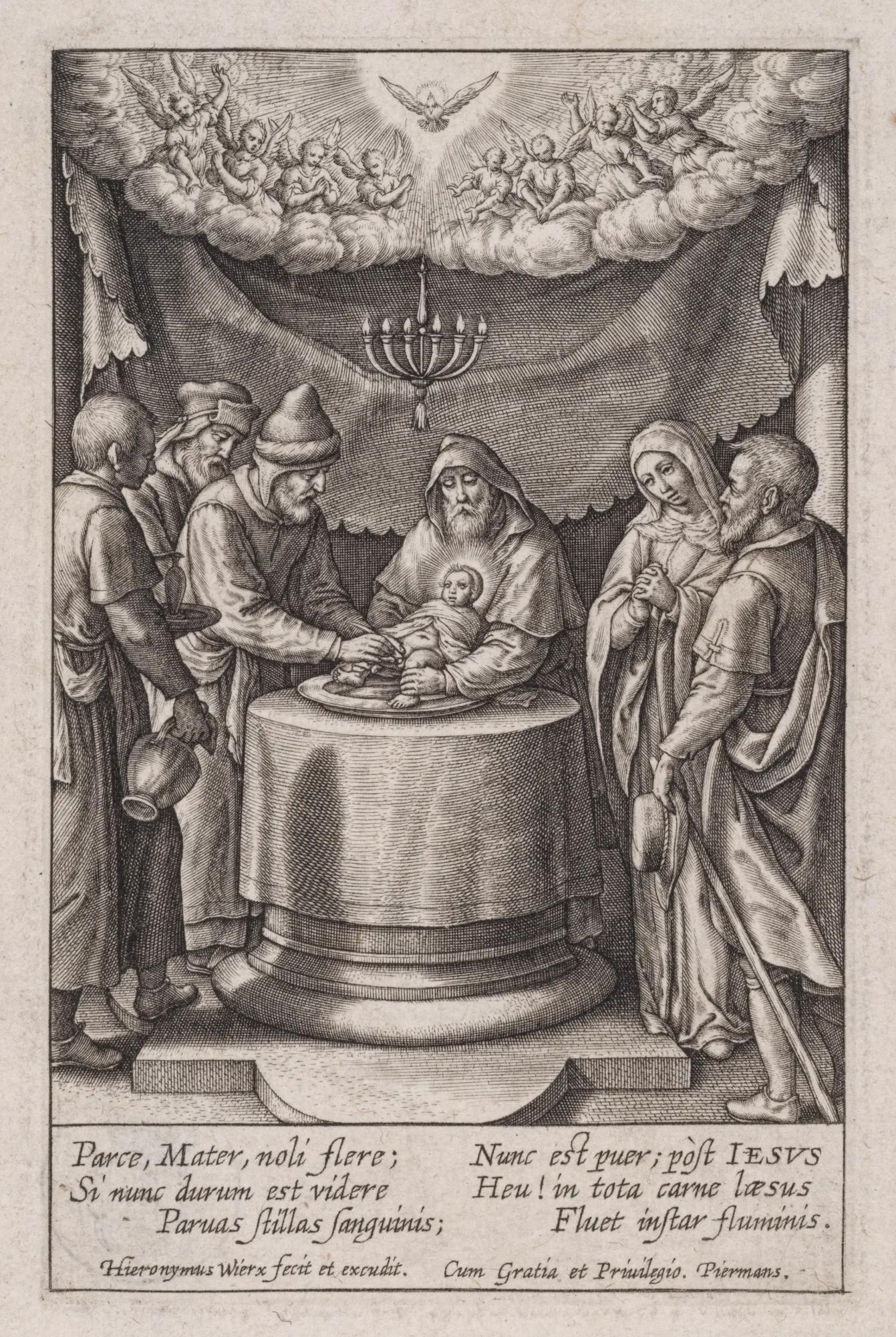
In his engraving, Hieronymus Wierix places Mary to the right of the table, her hands clasped to her chest. The Latin verse beneath the scene speaks directly to her. Parce, Mater, noli flere (‘Don’t weep, Mother’), the first line reads. Even these few drops of blood are hard for Mary to bear. At the Crucifixion, the verse tells her, her son’s blood will flow like a river. The print belongs to a series on the life of the Virgin. Wierix shows us what is happening to the child, while the verse asks us to consider what lies ahead for his mother.
Once Upon a Time in Flanders is a podcast created by Sven Speybrouck and published by Nieuwsblad. Special thanks to art historian Wendy Wauters. The podcast was made possible with support from The Phoebus Foundation, Katoen Natie, Indaver and Hannibal Books.