The conservation of ‘Susanna and the Elders’ by Jan Sanders van Hemessen
The conservation studio at The Phoebus Foundation is currently working on a remarkable painting: Susanna and the Elders by Jan Sanders van Hemessen (c. 1500–1556/57), one of the most distinctive painters active in sixteenth-century Antwerp. Painted on panel, the work is signed and dated 1547 at the lower left, placing it among the artist’s mature works. The conservation treatment, carried out by Sven Van Dorst and his team, has now been under way for more than a year in preparation for the exhibition Van Hemessen & Father, which will take place at the Snijders&Rockoxhuis in Antwerp in 2026. There, the public will be able to see the conserved painting for the first time.
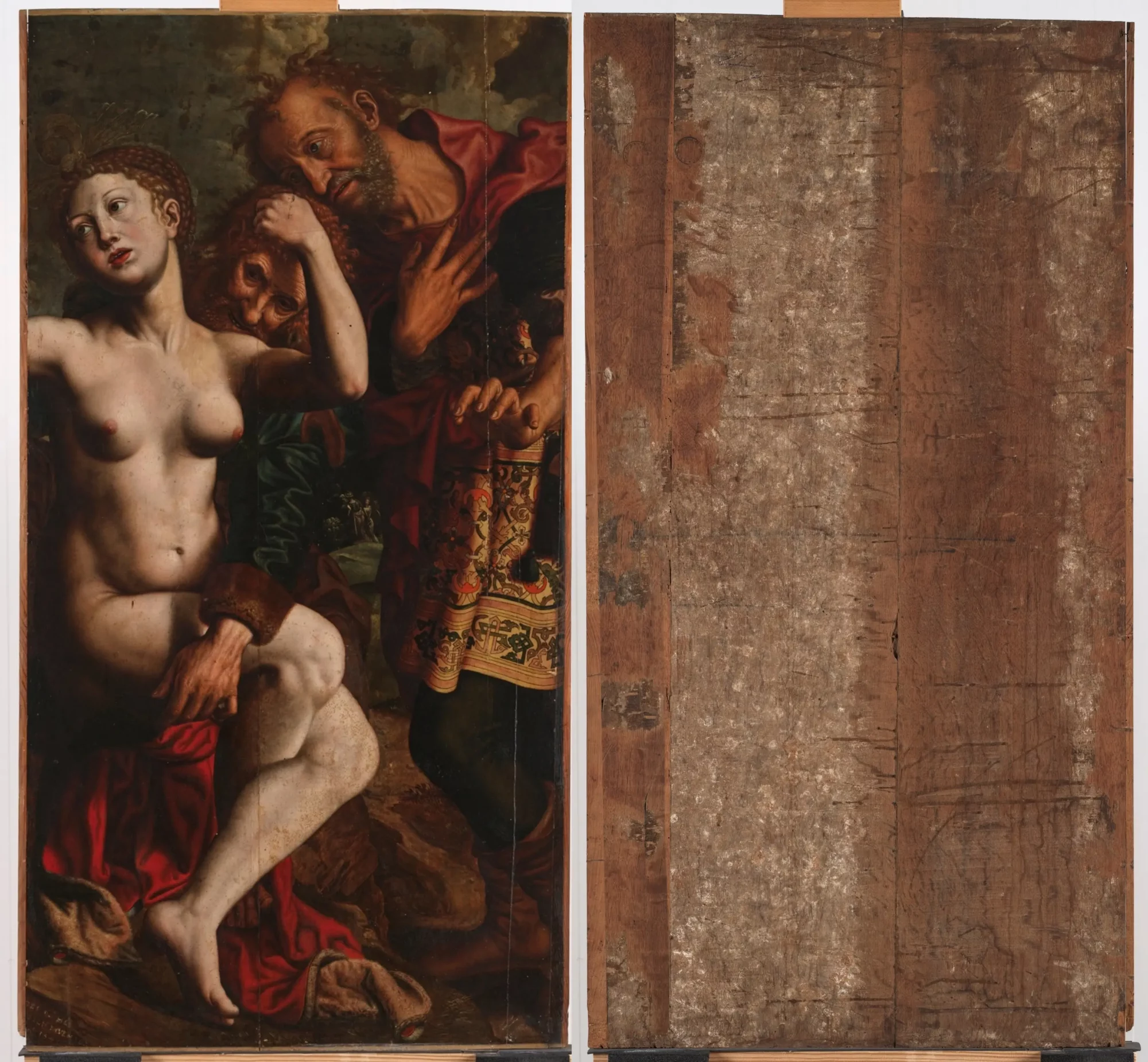
Oil on panel, 132.5 × 70.6 × 0.9 cm
The Phoebus Foundation, Antwerp
Before conservation
A fragment of a larger story
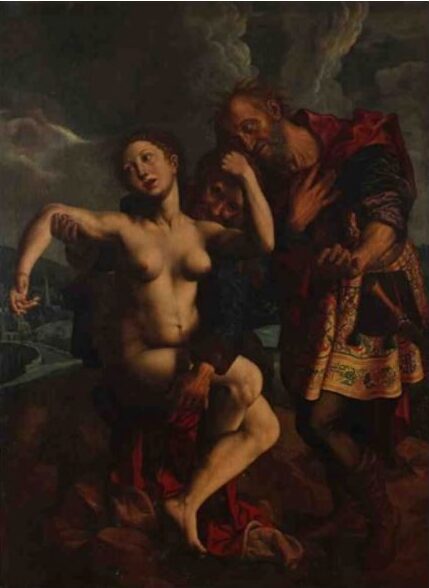
The conservation treatment was preceded by a thorough technical examination. This quickly revealed that the panel had been reduced on all four sides in the past, or in this case, sawn down. The right-hand edge was also cut unevenly, causing the panel to slope downwards. As a result, important parts of the composition were lost. Susanna’s right arm is now missing, as is part of the left shoulder of one of the elders. A substantial section of the original landscape was also lost.
We have a fairly good idea of what the painting originally looked like thanks to a second version of the composition, painted on canvas and known from a photograph. The missing elements are visible there, allowing us to estimate that the panel originally measured approximately 150 by 100 cm. Why the painting was reduced so drastically remains unknown and cannot be determined from the work itself. There are, for instance, no notable signs of fire or water damage.
A weakened panel
At the start of the treatment, the wooden support was in a worrying condition. The panel is made up of three vertical oak boards, with narrow strips of wood added later along the left- and right-hand edges to facilitate framing. Large areas of the boards had been weakened by woodworm damage along the panel joins. As a result, the structure was unstable and the panel could not be handled safely without a frame providing additional support.
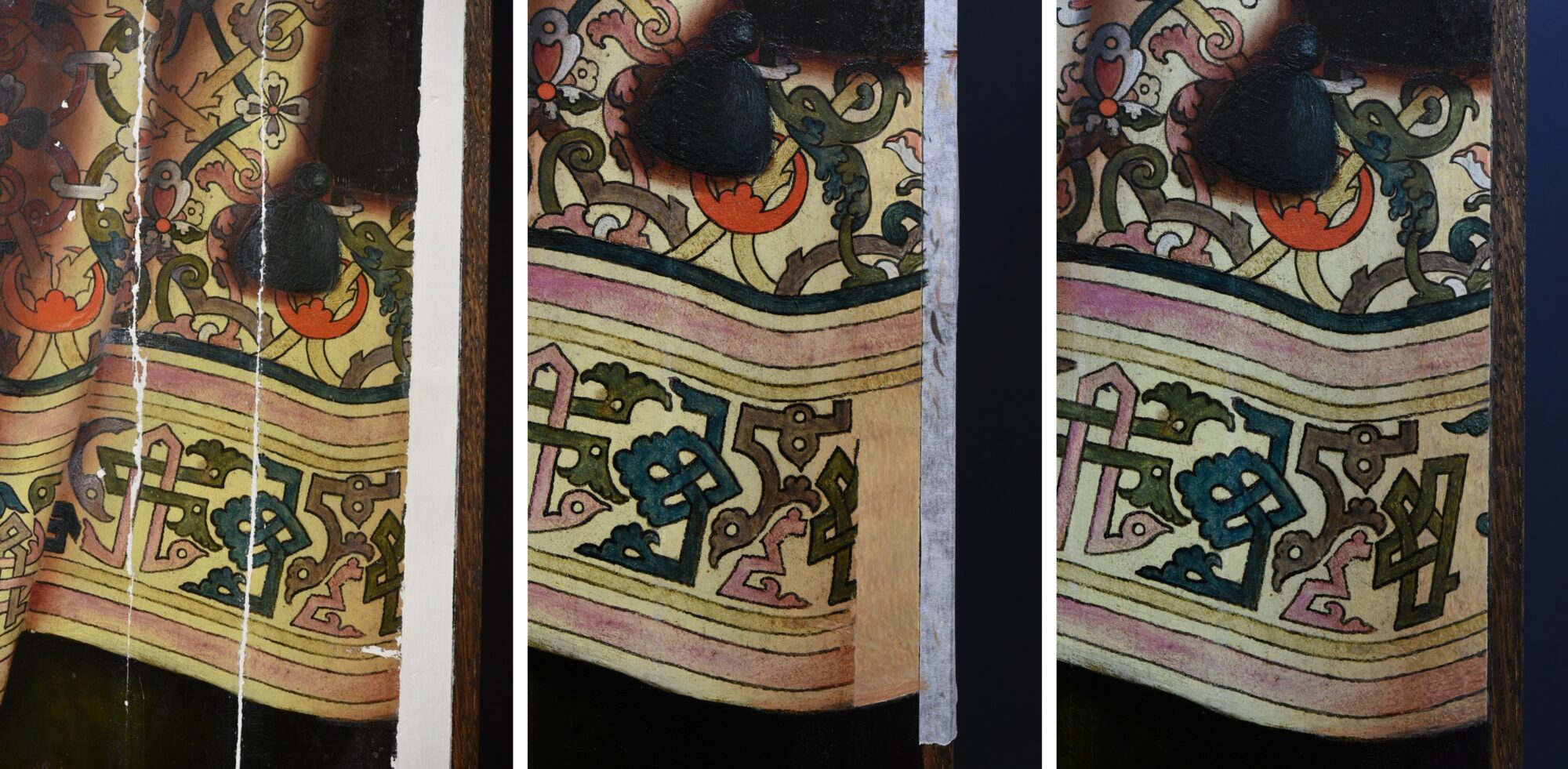
To ensure the painting’s long-term stability, structural treatment was necessary. This was carried out by Brian Richardson and Sara Mateu, specialists in panel and wood conservation. The weakened joins were locally reinforced by introducing fresh adhesive and, where necessary, adding filling material. Small wooden cleats were also applied to the reverse of the panel at its weakest points. On the right-hand side, where the panel had been sawn at an angle, a piece of oak was added to restore a perfectly rectangular format. Thanks to these interventions, the painting is once again stable enough to be handled and stored safely.
Hidden colours revealed
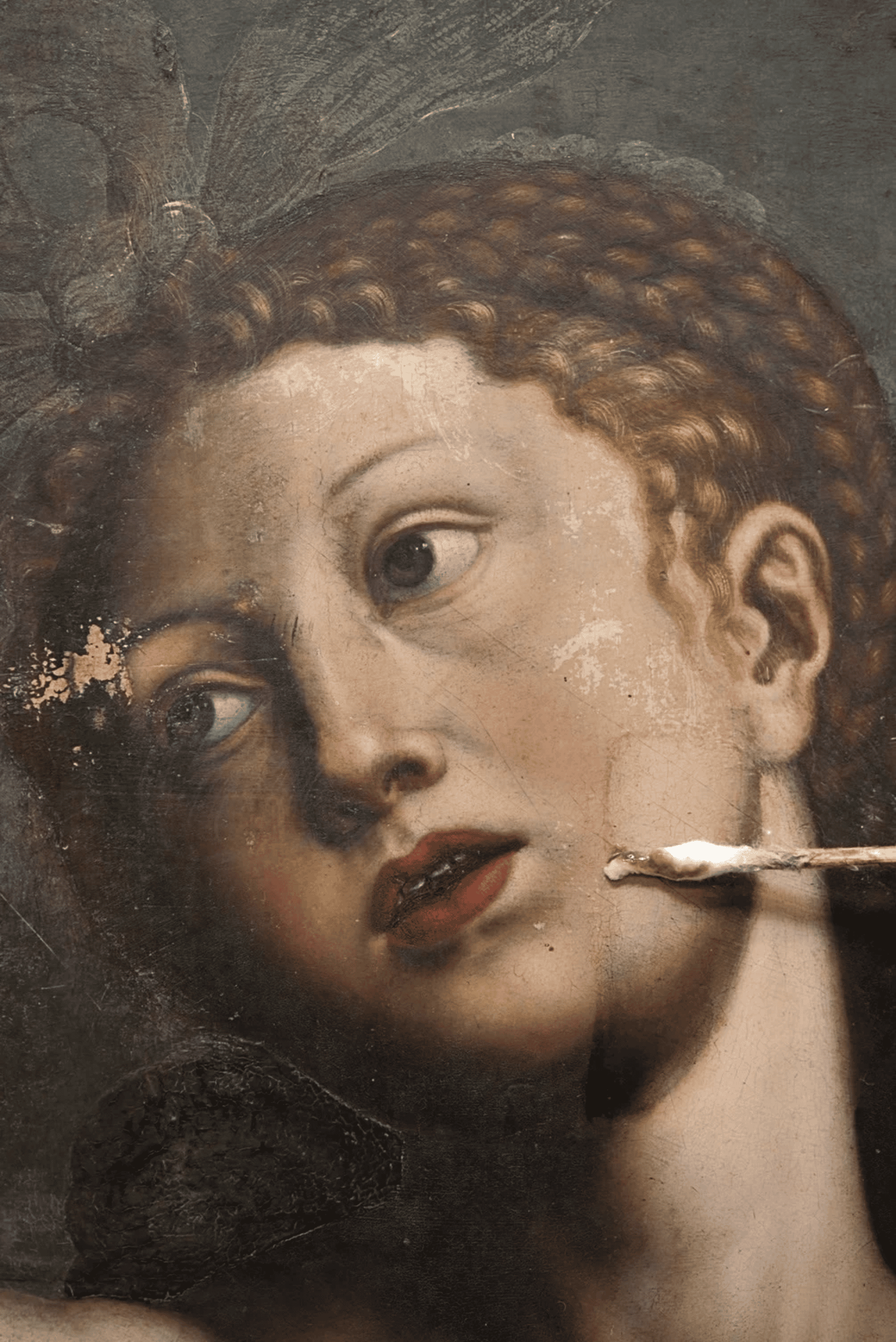
The front of the painting was also in need of thorough conservation. Its surface was covered by several layers of dirt, heavily yellowed varnish, and later retouching and overpaint. These additions had largely obscured Van Hemessen’s original use of colour.
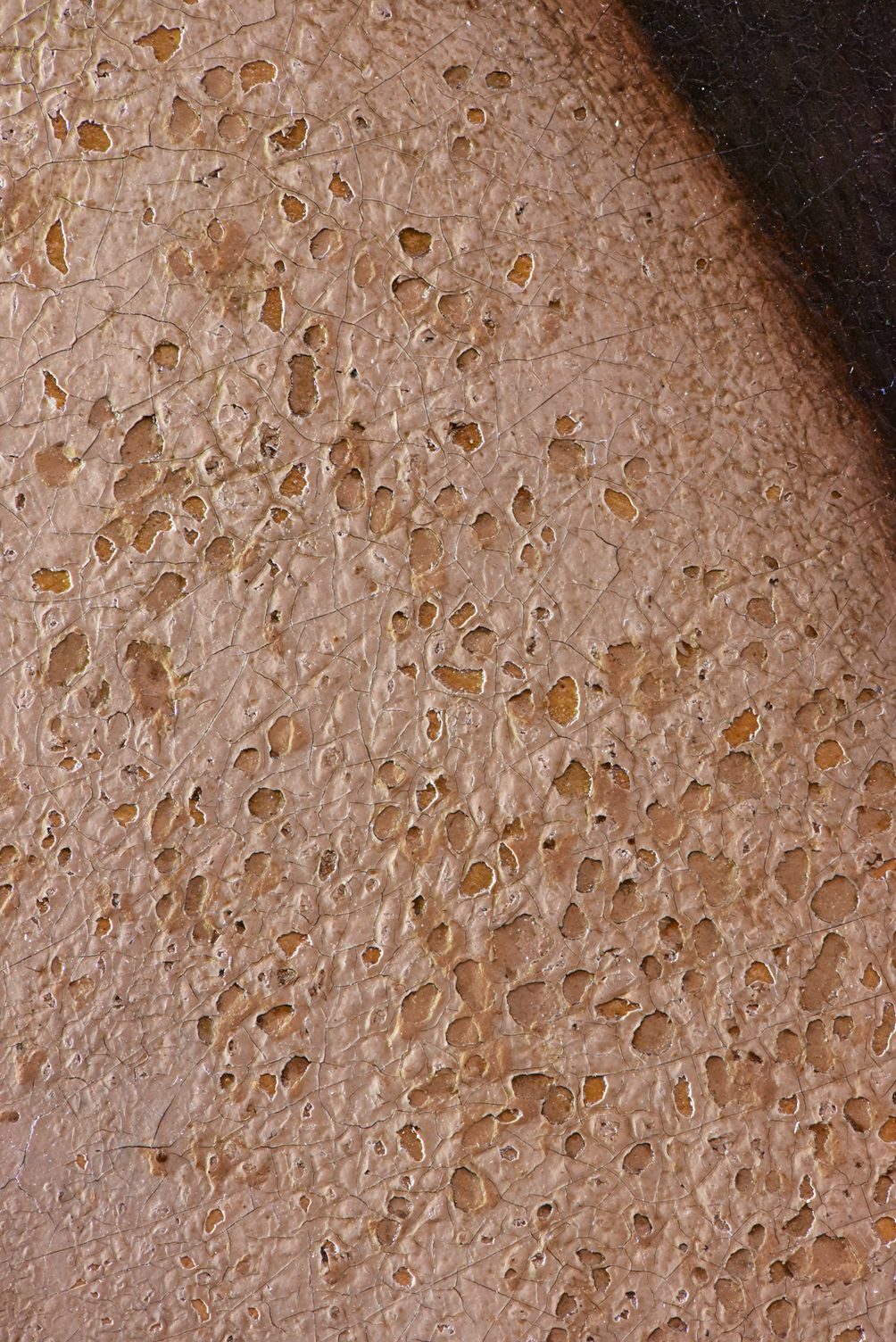
During cleaning, these distracting layers were removed step by step. The process was particularly rewarding. As the old varnish layers disappeared, the quality of Van Hemessen’s handling gradually came back into view. The treatment showed that the original paint layer had survived remarkably well, apart from a localised area of damage on Susanna’s legs, where numerous small craters are visible in the paint surface. The exact cause is difficult to determine with certainty, but the damage may have occurred during an earlier conservation treatment in which excessive heat or a caustic chemical mixture was used, irreversibly affecting the paint.
With the varnish and surface dirt removed, Van Hemessen’s intense use of colour and masterful brushwork once again come fully into their own. The flesh tones, in particular, reveal his exceptional technical skill. The faces and hands of the elders show a refined build-up of light, shadow and colour that is characteristic of the artist.
The final stage
The conservation is now in its final stage. After cleaning, a layer of varnish was applied to protect the original paint and restore the saturation of the colours. Small losses and surface irregularities were then filled with a suitable filling material. A first layer of retouching in watercolour was applied over these fills.
The conservation is now at the stage of final retouching. For this, pigments bound in a synthetic medium are used. These retouches visually integrate areas of earlier damage, allowing the viewer’s attention to return to the original composition. Damage along the panel joins, as well as the losses on Susanna’s legs, is treated as discreetly as possible so that it blends into the surrounding paint surface. On the right-hand side, where a new piece of wood was added, part of the composition is being reconstructed. This allows as much of the original painting as possible to remain visible once the work is framed.
Once the retouching is complete, a final varnish will be applied and the painting will receive a new, appropriate frame. This will bring to a close a conservation treatment that has not only improved the work’s physical condition, but also brought Jan van Hemessen’s exceptional artistic qualities back into view.
For more on our conservation work, research and the stories behind the collection, sign up to our newsletter.