The Turnhout Witch Bottle
Please note that the podcast is currently available in Dutch only.
Turnhout, in the late sixteenth century. A resident of what is now Café De Zwarte Ruiter buries a tightly sealed jug outside the door. A witch bottle, meant to keep evil forces at bay. Or perhaps to trap a witch inside. For centuries, it remained untouched, until the café was renovated in 2020. The jug was dug up and the seal broken. The only clue to what it had been used for? A foul-looking sludge.
Witches in Art
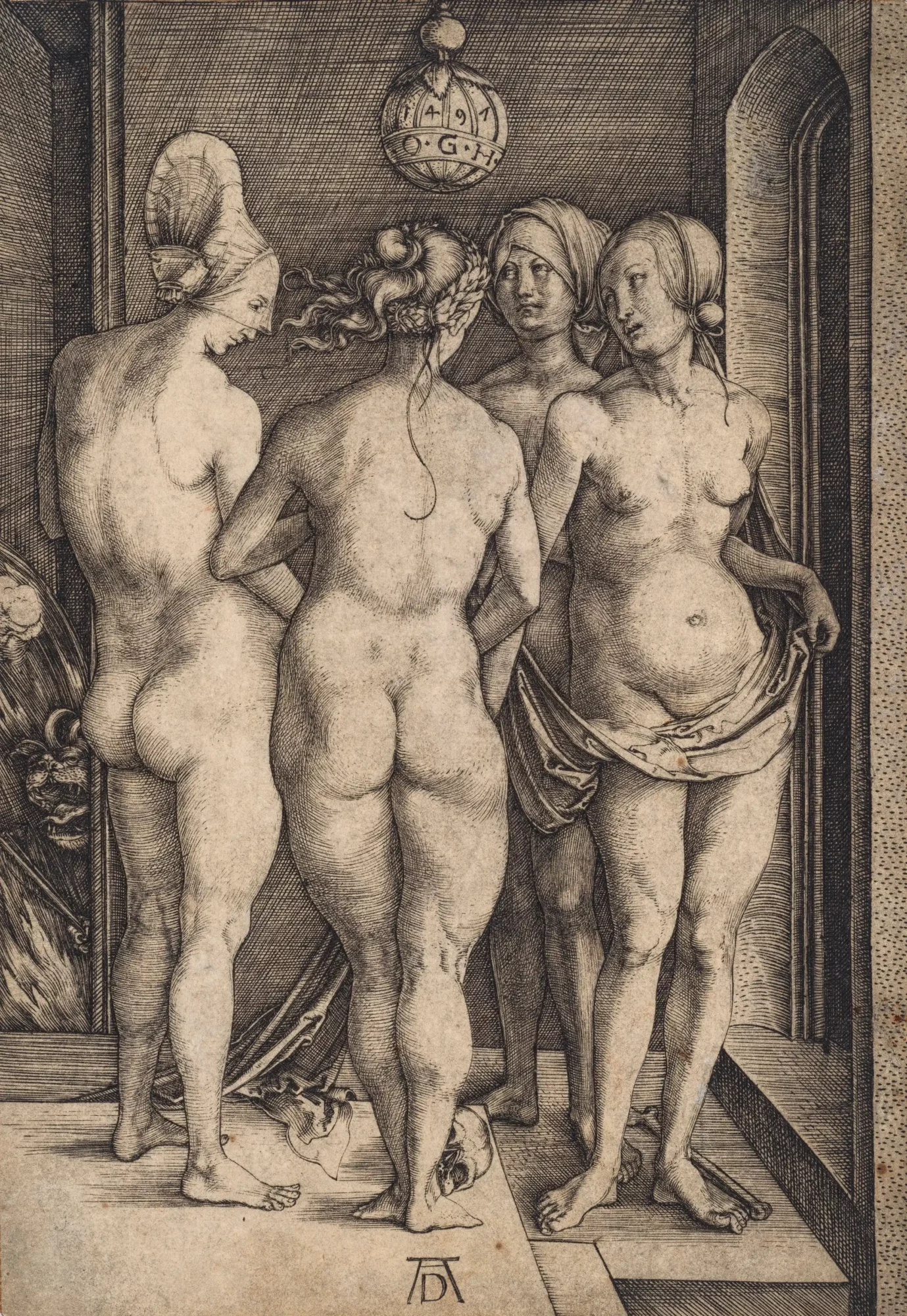
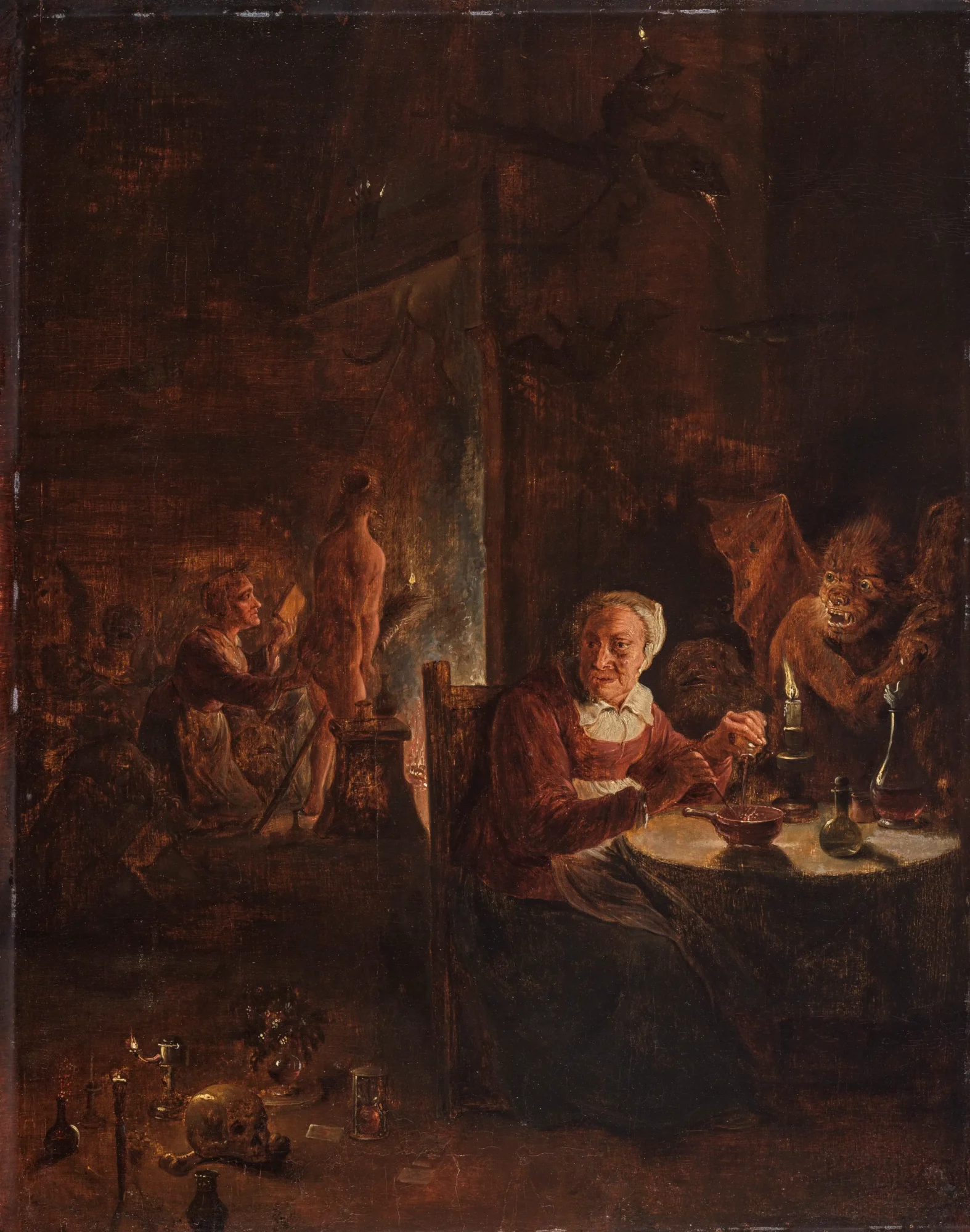
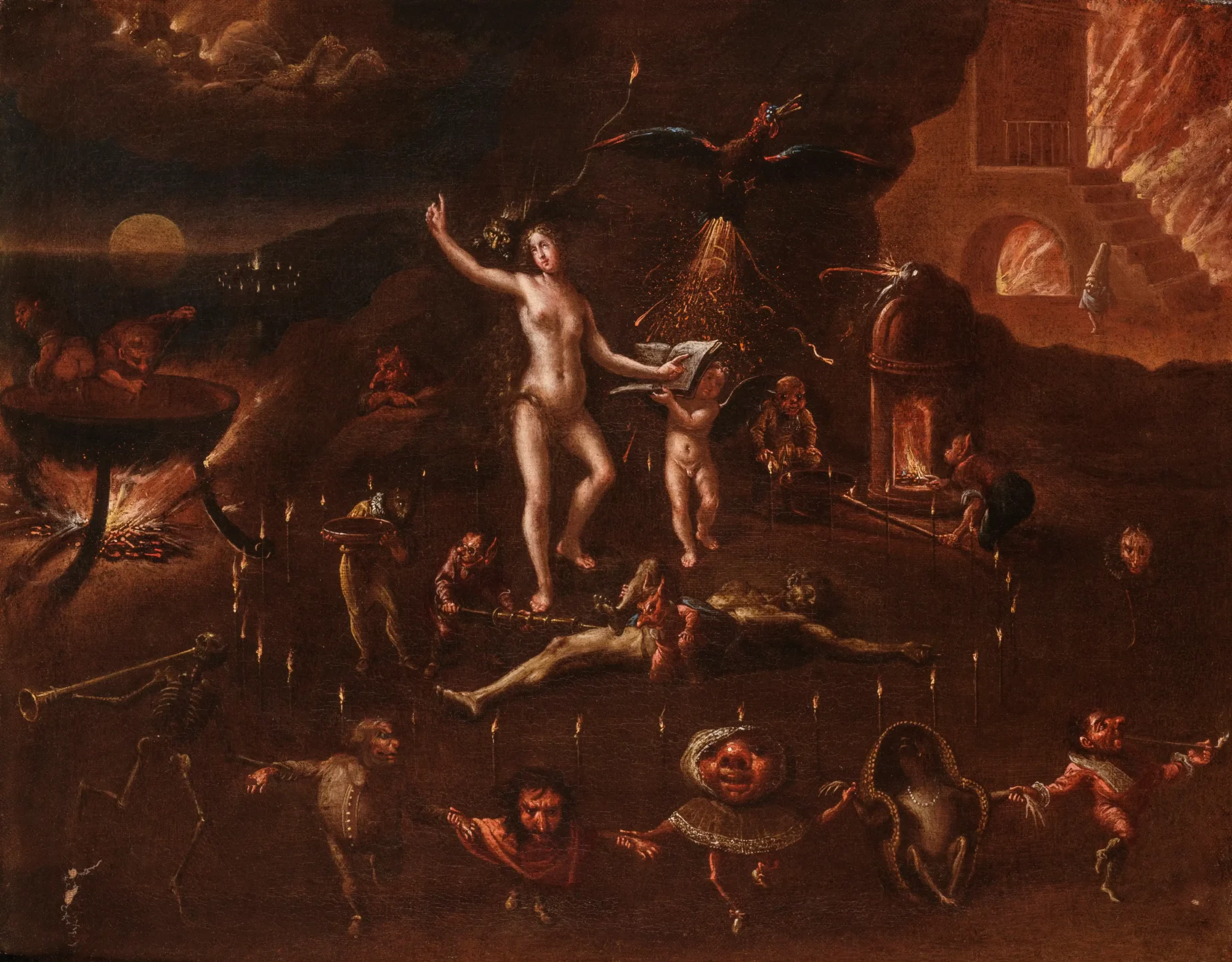
From the late fifteenth century onwards, witchcraft began to take on increasingly recognisable forms in European art. Not because there was ever one fixed image of the witch, but because artists gradually developed a visual repertoire that proved remarkably persistent: naked bodies, skulls, demons, potions, nocturnal gatherings and rituals that seemed to unfold beyond the bounds of ordinary life.
With Albrecht Dürer, the meaning remains tantalisingly elusive. His 1497 print is traditionally known as The Four Witches, although no convincing explanation has ever established who the women are or exactly what is unfolding before us. A century later, that world has become far more explicit. In the work of David Teniers and in the anonymous depiction of a witches’ sabbath, cauldrons, bottles, demons and magical practices have become part of an established visual language.
Artists were not simply recording an existing set of beliefs. Their images also helped shape what witchcraft was imagined to look like.
Against Fortune-Tellers and Sorcerers
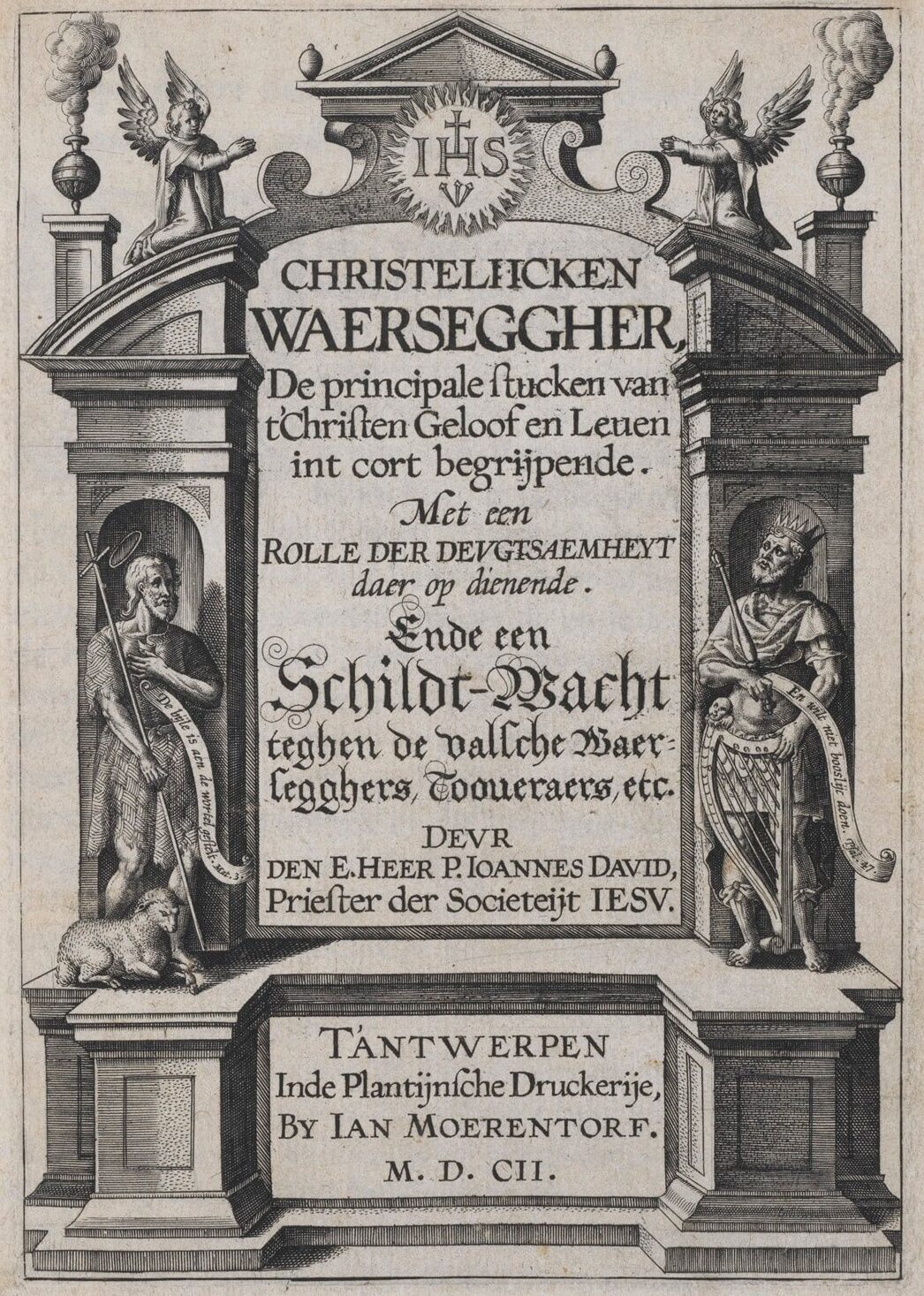
Where artists gave the supernatural a visible form, the Jesuit Joannes David was more concerned with drawing the line between faith and superstition. His Christeliicken waerseggher, published in Antwerp in 1602–1603, deliberately borrows the language of fortune-telling. Not predictions of what is to come, but lessons in Christian faith and virtue, followed by a Schildt-wacht against “false fortune-tellers, sorcerers” and other practices that, in David’s view, led people astray.
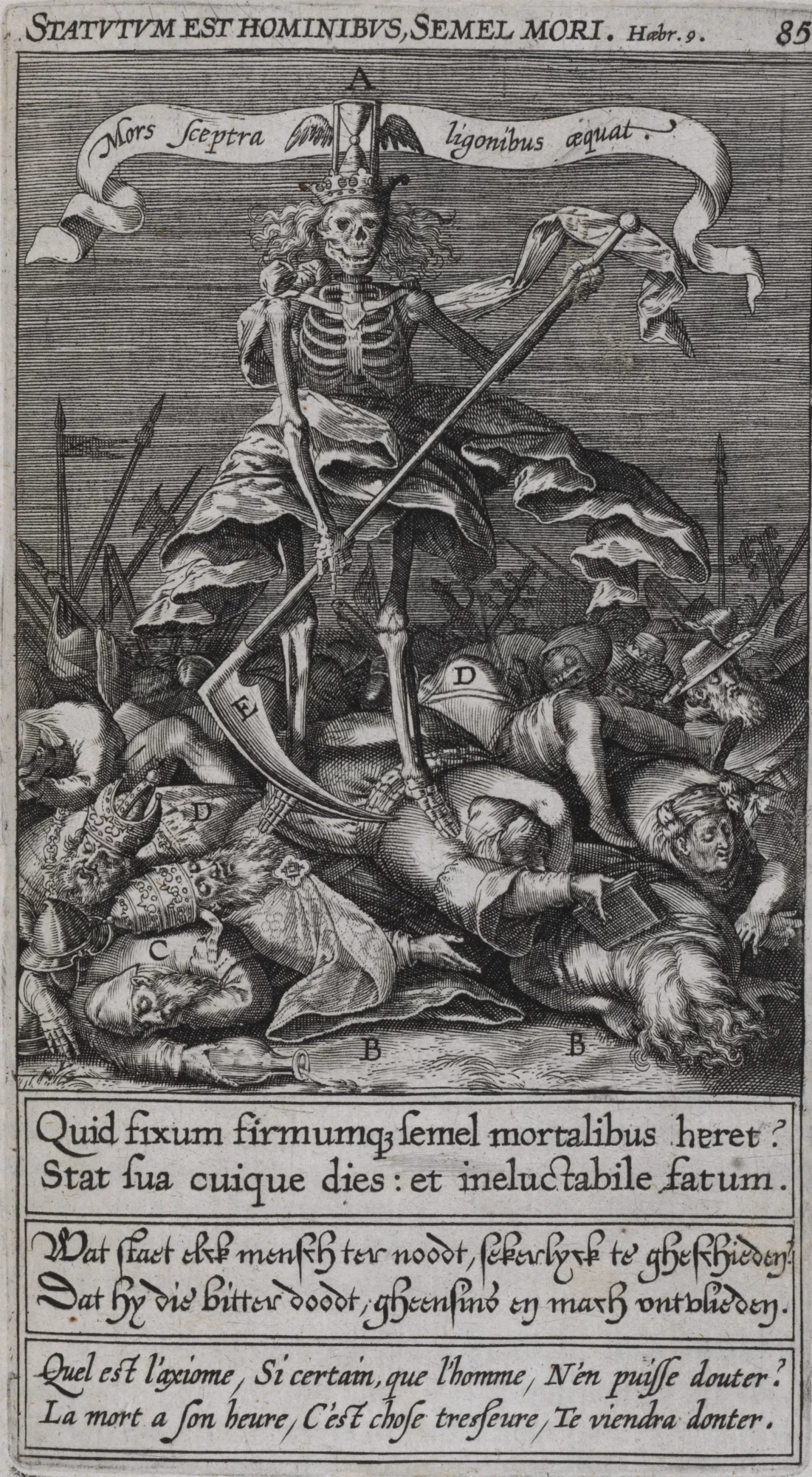
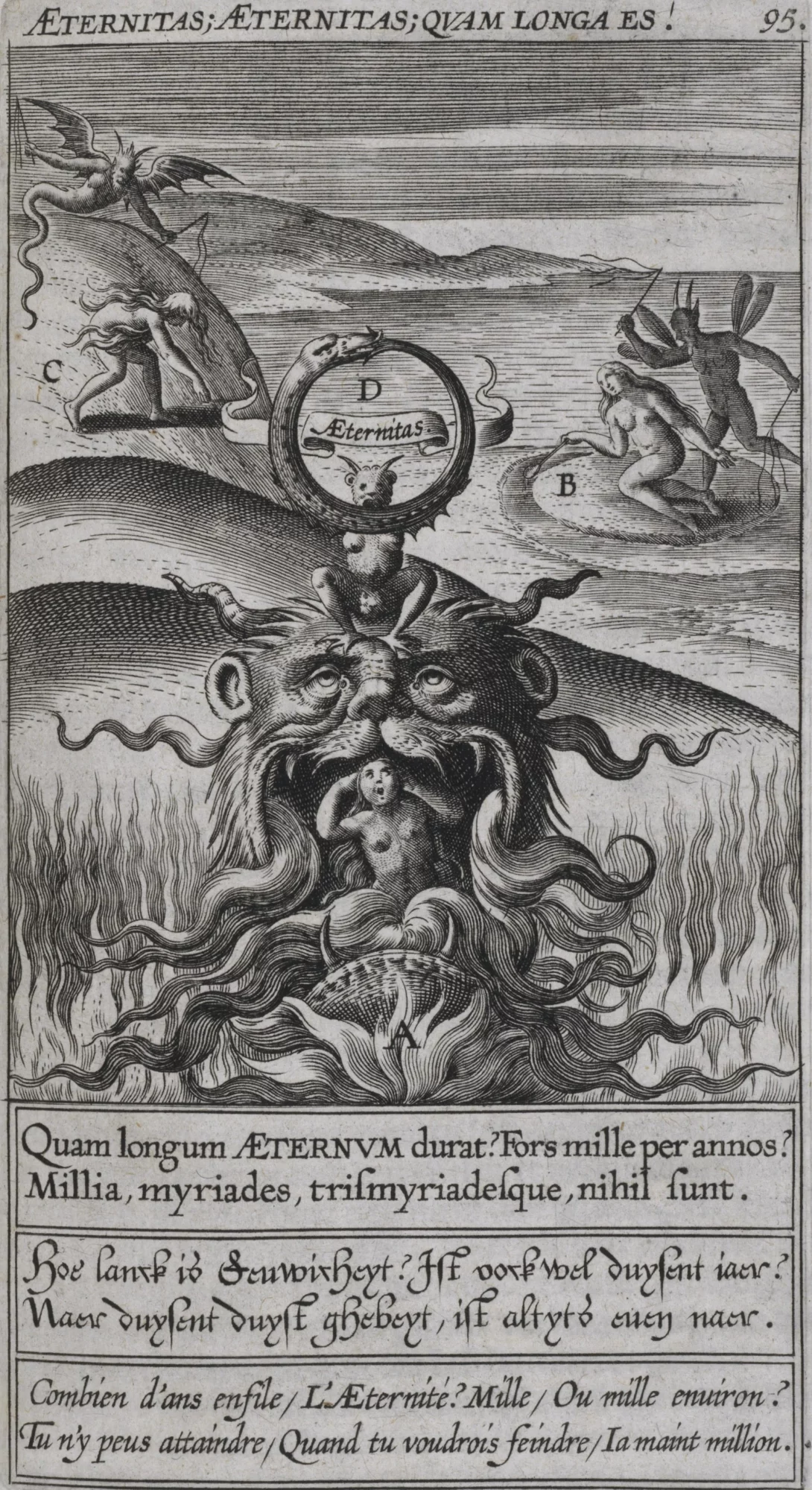
The prints leave little room for doubt either. Wisdom begins with the fear of God; to reject God and turn to the devil is to choose folly. Fortune-telling and sorcery are therefore not presented here as a mysterious world to marvel at, but as a field in which faith, knowledge and deception had to be carefully distinguished from one another.
Once Upon a Time in Flanders is a podcast created by Sven Speybrouck and published by Nieuwsblad. Special thanks go to historian Lisa Demets (Ghent University). The podcast was made possible with the support of The Phoebus Foundation SON, Katoen Natie Group, Indaver and Hannibal Books.