The heron that cost Mary of Burgundy her life
Please note that the podcast is currently available in Dutch only.
We’re standing in the Carmelite monastery in the heart of Ghent. Now let’s jump back to 1465, when eight-year-old Mary of Burgundy moved to this extraordinary place. Back then, it was the ducal palace, complete with a menagerie of lions, a bear, magnificent peacocks, a parrot and much more besides. It was the home of the young Mary of Burgundy, who had no idea that one graceful creature would one day bring her life to an end.
A duchess between past and present
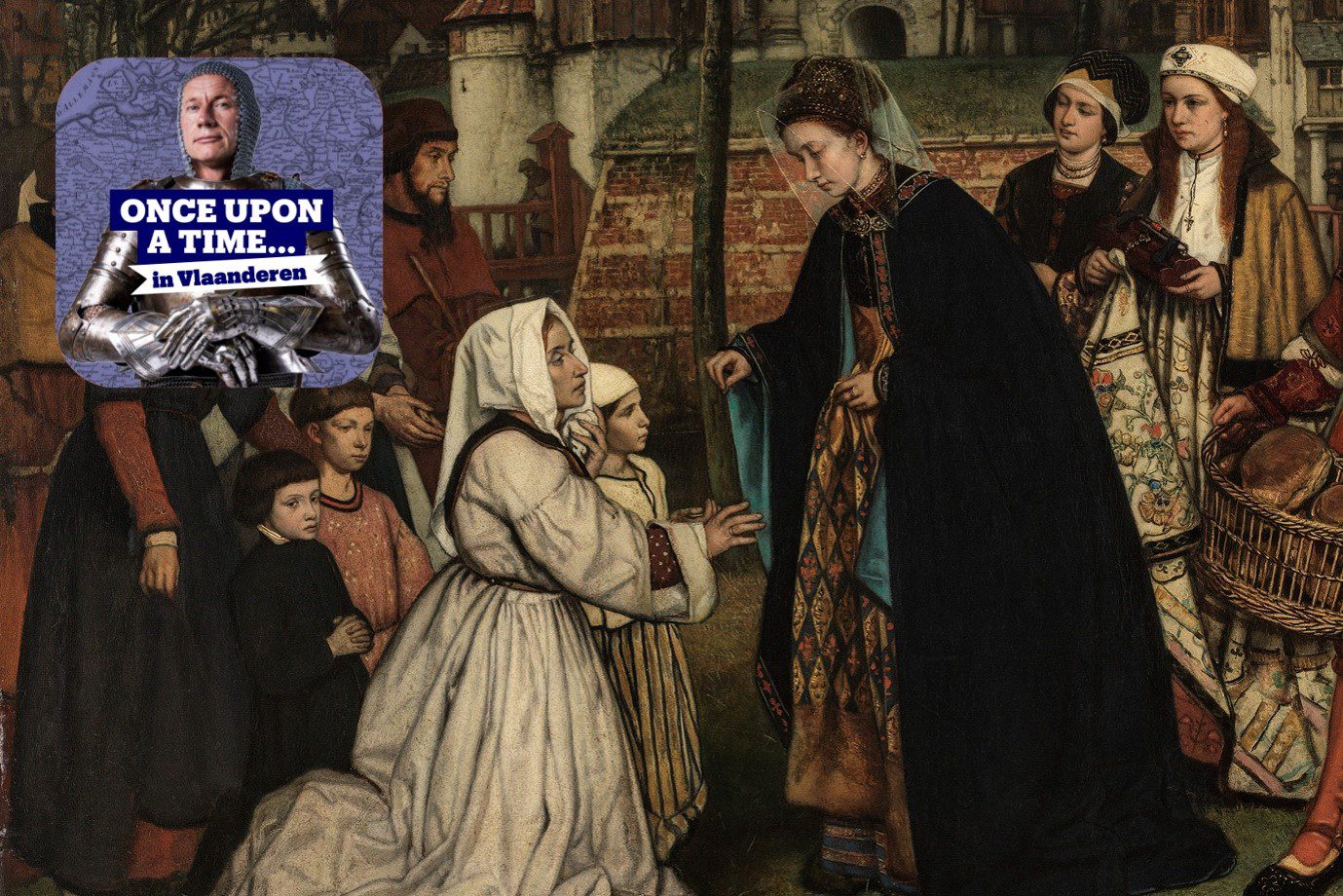
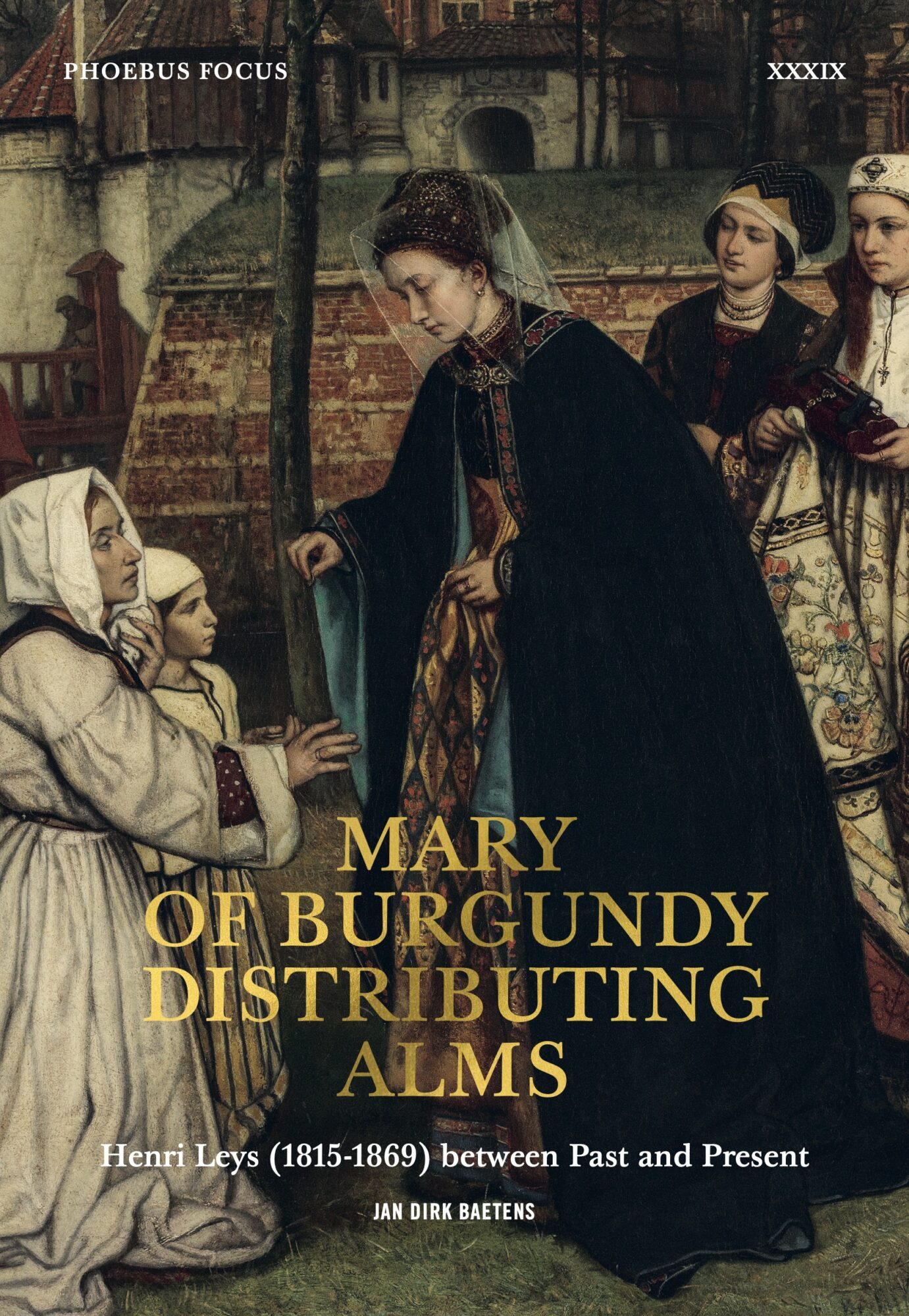
In Mary of Burgundy Distributing Alms, from the collection of The Phoebus Foundation, Henri Leys depicts the young duchess handing out money and bread to the poor, widows and children. The scene refers to the oath Mary took in 1477 when she entered Ghent as Countess of Flanders. Among other things, she promised to respect the rights of its citizens and to protect widows and orphans.
Leys set the scene not in Ghent, but in Bruges. Mary stands at the centre, personally handing a coin to a kneeling woman. Her ladies-in-waiting accompany her, while a page carries a basket of bread. Further back, her husband, Maximilian of Austria, is also shown giving alms.
Yet the painting is not simply about the fifteenth century. Leys looked back at the past from the nineteenth century, using history to reflect on issues that also mattered in his own time: power, responsibility and social inequality. Mary thus becomes more than a historical figure. She is also presented as a ruler who takes her responsibilities towards her subjects seriously.

Phoebus Focus XXXIX
How did Henri Leys see Mary of Burgundy, almost four centuries after her death? In Phoebus Focus XXXIX, art historian Jan Dirk Baetens takes a closer look at the painting and explores how Leys reshaped the past for a nineteenth-century audience.
Once Upon a Time in Flanders is a podcast created by Sven Speybrouck and published by Nieuwsblad. Special thanks go to historian Lisa Demets (Ghent University). The podcast was made possible with the support of The Phoebus Foundation SON, Katoen Natie Group, Indaver and Hannibal Books.